Dark Tendencies in Contemporary Slovak and Czech Figural Painting
Exhibition: Group Exhibition
Curator: Kristína Jarošová
Location: Umelka, Bratislava, Slovakia
Date: 2015
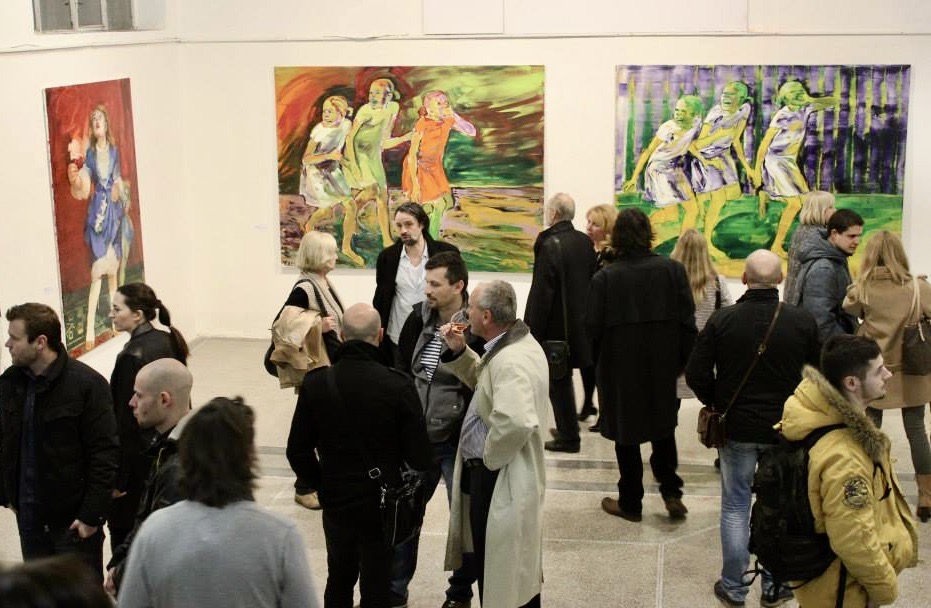
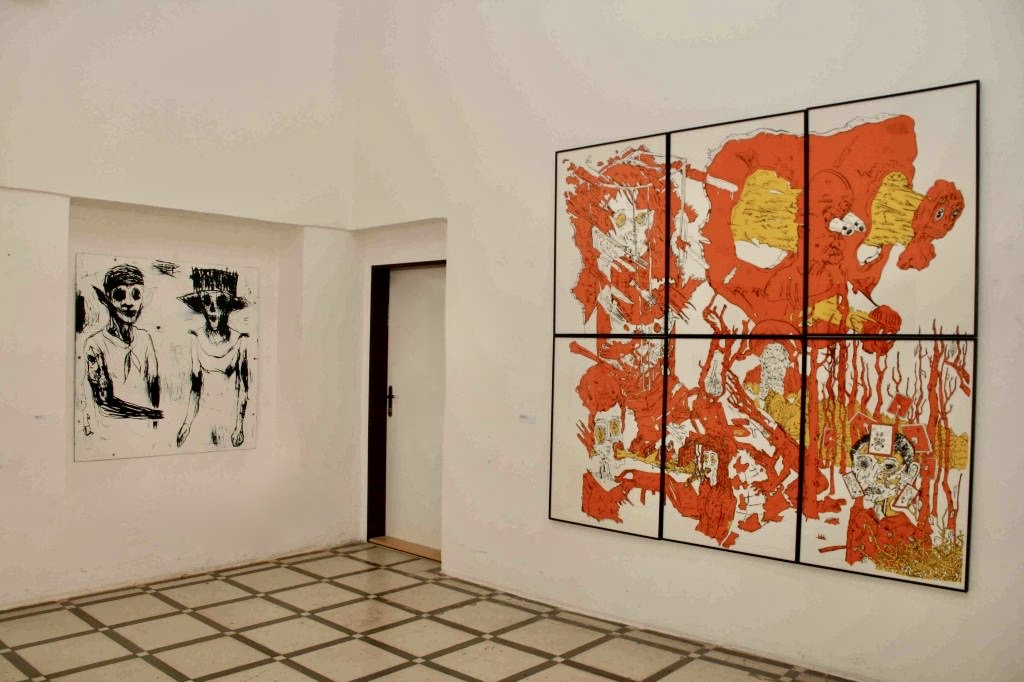


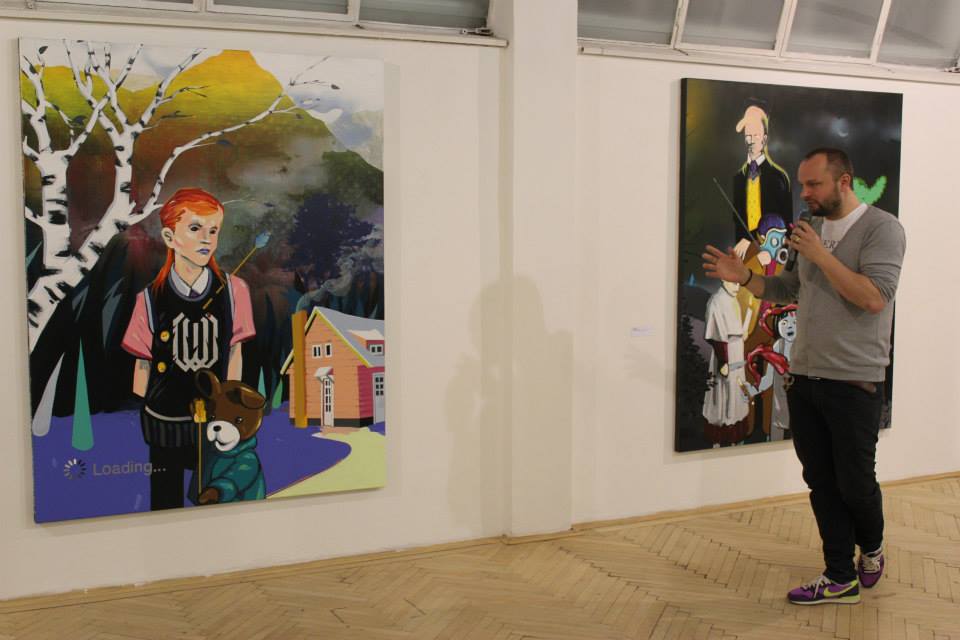
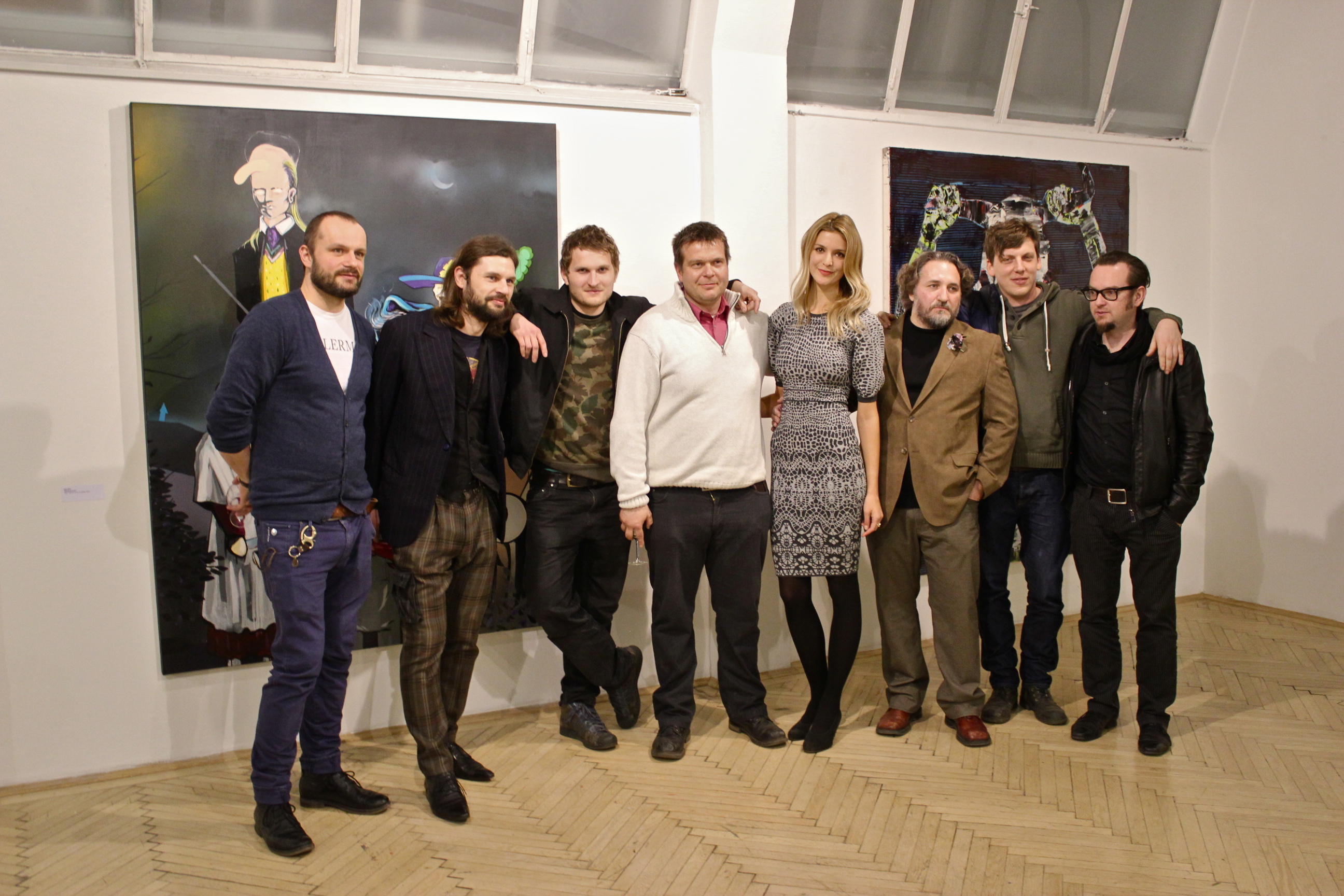
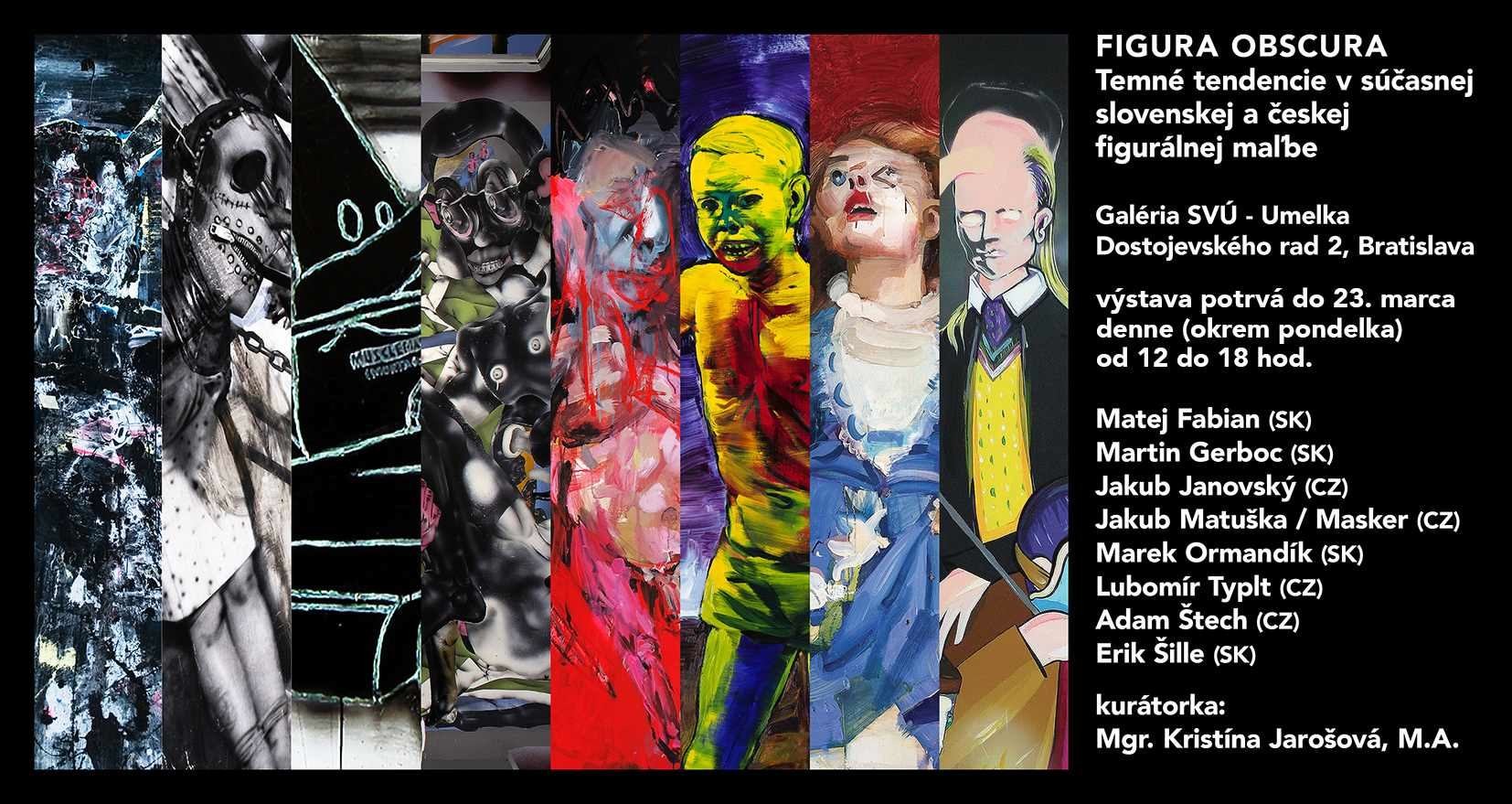


The Figure. Adored and ignored, elevated and damned.
The Figura Obscura exhibition presents a selection of established Slovak and Czech artists exploring the dark tendencies in contemporary figural painting. With authenticity and innovation, they expose the inverse side of humanity and critically reflect on the pressing issues of today’s consumer society. Holding up an unrelenting mirror, they observe and scrutinize themselves in the process. Through somber depictions of societal decline, blindness, and suffering, they simultaneously critique, escape, and seek their way back. Their work embodies this return, attempting to bridge the gap between imposed order and individual vision in the pursuit of new contexts and identities.
Since time immemorial, humanity has sought to understand itself, to study its reflection in the mirror. Figural art has persisted precisely due to its social dimension—it is a means of communication with the external world, from the earliest cave paintings to the royal portraits of past centuries and today’s digital culture. Without figural representation, we would not know the faces of the historical figures who shaped our world—emperors, philosophers, priests, and artists, as well as the everyday person. Despite the predicted demise of figural art in the face of photography, film, and avant-garde abstraction, the figure remains. In fact, it is undergoing a renaissance. A new generation of painters is reintroducing figuration into their artistic lexicon, reaffirming its enduring relevance. But what does it reflect today?
The exhibiting artists—Matej Fabian (SK), Martin Gerboc (SK), Jakub Janovský (CZ), Jakub Matuška / Masker (CZ), Marek Ormandík (SK), Erik Šille (SK), Adam Štech (CZ), and Lubomír Typlt (CZ)—confront us with a destructive reality imbued with deep distress, uncertainty, and moral crisis.
Read more
(The euphoria following the 1989 Velvet Revolution in Czechoslovakia, alongside its political and economic transitions, heralded an era of seemingly limitless freedom. However, this was soon followed by a sobering realization. Crises of spirituality, consumerism, globalization, and dependence on digital media have created new constraints on liberty. Alienation, emptiness, identity loss, and the subtle fear perpetuated by mass media have entrapped individuals in a web of voluntary illiberalism.
The Figura Obscura exhibition captures this fragmented reality. The isolated, wandering figures on these canvases exist in uncertain time-space continuums, devoid of clear narratives or direction. The viewer is drawn into a nightmarish world where reality and illusion intertwine, becoming indistinguishable. The artists pose unsettling questions about the psyche of the endangered individual—about failure, powerlessness, and the unchangeable. Horror, tension, brutality, and death become new aesthetic categories, both captivating and repellent.
These themes unite the exhibiting artists, who amplify them through hyperbole, integrating them into their own suggestive works. With their rich sources of inspiration, strong pictorial sensibility, and technical virtuosity, they discover dynamic and progressive approaches to figuration. Their raw artistic expression pierces deep into the human soul, into its most secretive, shadowy corners. While the darkness of their works manifests through diverse themes and styles, figura obscura remains, for each artist, both individual and human.
The visceral brutality of these scenes, reinforced by expressive gestures, intense plasticity, and dark tonalities, is particularly evident in the paintings of Matej Fabian and Jakub Janovský. Their works reveal the spontaneity of Art Informel and Neo-Expressionism, drawing on German Expressionism, mythology, and underground cultures. The gestural application of paint, experimental use of color, and near-abstract depictions of the human form heighten the themes of repulsion and estrangement.
Similar tendencies appear in the raw, impulsive work of Marek Ormandík, whose expressive mark-making, reminiscent of Art Brut, conveys emotional intensity and a sense of artistic rebellion. Referencing ancient mythology, Christian iconography, and contemporary issues, he focuses on the human/sinner figure in search of meaning and salvation.
In stark contrast, the visually seductive works of Erik Šille and Jakub Matuška / Masker depict seemingly lighthearted and alluring worlds, yet beneath their vivid surfaces lie grotesque and surreal narratives. The polished, rational expression and bright color palettes initially captivate, only to reveal layers of biting irony and hidden unease. Their paintings combine Renaissance influences with modern aesthetics—street art, comics, video games, graffiti, and graphic design—resulting in a fusion of absurd imagery that speaks to information overload and contemporary moral crises.
Emotionally charged German Expressionism, dramatic Baroque influences, and the absurdity of Dadaism converge in the works of Adam Štech and Lubomír Typlt. Their dynamically constructed compositions evoke fear, inner turmoil, and existential failure. Isolated, restless figures emerge in ambiguous time and space, prompting urgent questions about the dehumanization and contradictions of modern globalized culture.
The dark, inverted side of humanity—enriched by references to philosophy, literature, Romanticism, German Expressionism, and underground movements—defines the work of Martin Gerboc. His haunting depictions of human decline and suffering push the viewer to the limits of aesthetic perception. Not only do these works confront themes of vanity, futility, death, and the normalization of evil, but they also question the very purpose and role of fine art itself.
Ultimately, Figura Obscura invites us to gaze into the abyss of contemporary figural painting, where human figures are stripped of certainty and stability, suspended between chaos and meaning. Through their disturbing yet captivating visions, these artists force us to question not only the state of society but also our own place within it.
Exhibiting Artists: Matej Fabian, Martin Gerboc, Jakub Janovský, Jakub Matuška / Masker, Marek Ormandík, Erik Šille, Adam Štech, Lubomír Typlt
Text by: Kristína Jarošová