Blog

  • The Collector’s Yourney

    The Collector’s Yourney

    Artimist Collector's Yourney

    The Collector’s Yourney

    ARTIMIST x Upcoming Art Events 2026

    2026 Editions
    International Art Events
    Fine Art Immersions

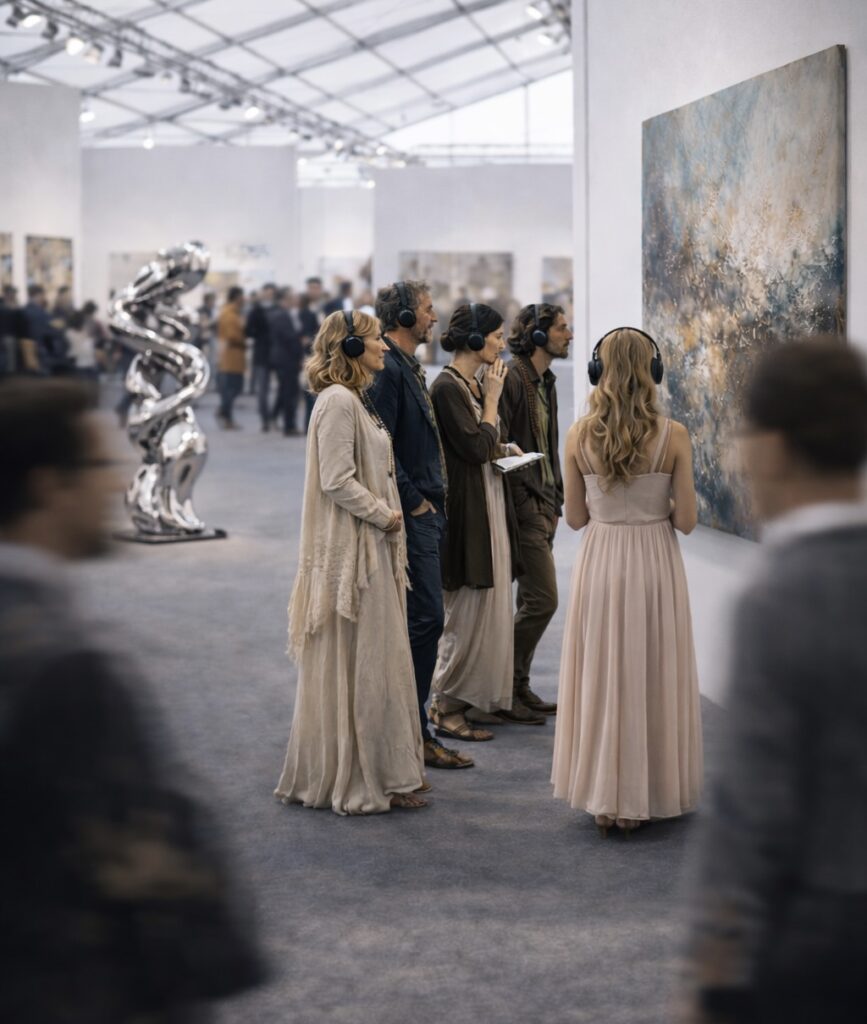
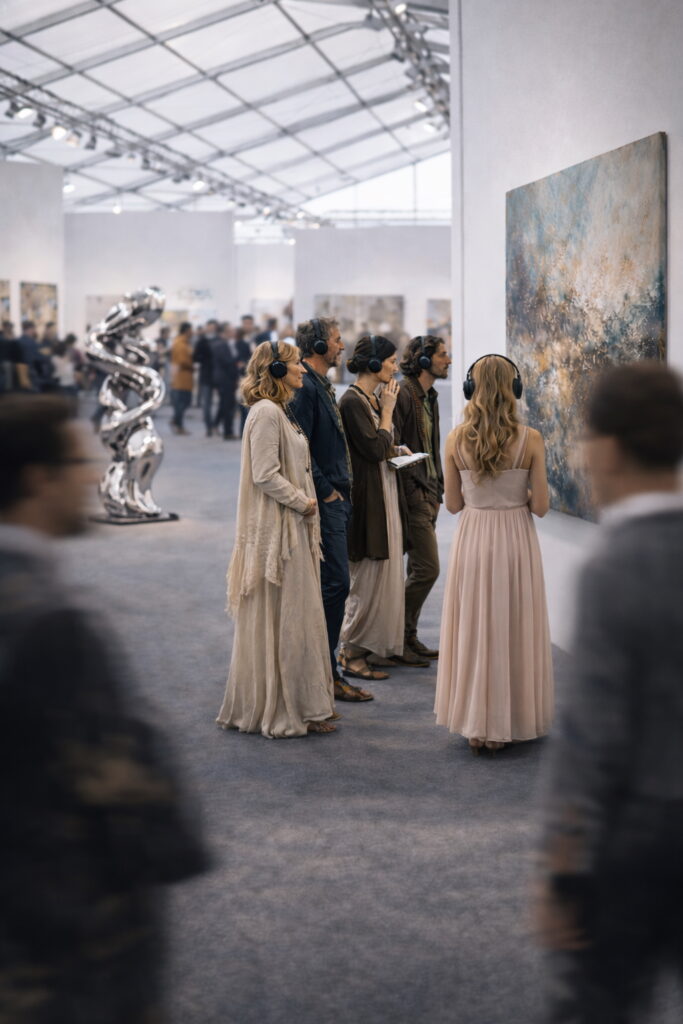
    ARTIMIST offers curated guidance, art advisory, and immersive encounters at major art events — integrating curatorial insight, embodied perception, and a conscious collecting framework.

    Our formats are designed for art collectors and enthusiasts drawn to a more authentic, resonant, and intentional approach to experiencing and collecting art.

    Through grounding, contemplative viewing, subtle sensory activation, and curatorial framing, we create space for meaningful art encounters and aligned collecting decisions.

    Small groups or private sessions upon request.

    What Does It Involve?

    Expert-led guidance and curated art encounters with selected works at fairs, exhibitions, biennales, museums, galleries, private collections, and studios.

    • Guided contemplative fine art immersion
    • Curated art-inspired gentle body–mind practices to expand perception from visual to visceral, supporting personal resonance and insight
    • Reflective and creative prompts for personal response
    • Curatorial and contextual framing

    What This Supports

    • Deeper resonance, appreciation, and understanding of selected artworks
    • Increased awareness, states of flow, and layered insight
    • Heightened presence and body–mind sensitivity
    • A sense of calm, clarity, and refined perception
    • Conscious collecting decisions

    Format

    Private Immersive Session

    1:1
    (duration depending on your preference and context)

    For focused depth and personal calibration.

    Small Group Immersion

    2–8 participants
    30–120 minutes

    Designed for collectors who value shared exploration and comparative resonance.

    ARTIMIST at Art Events 2026

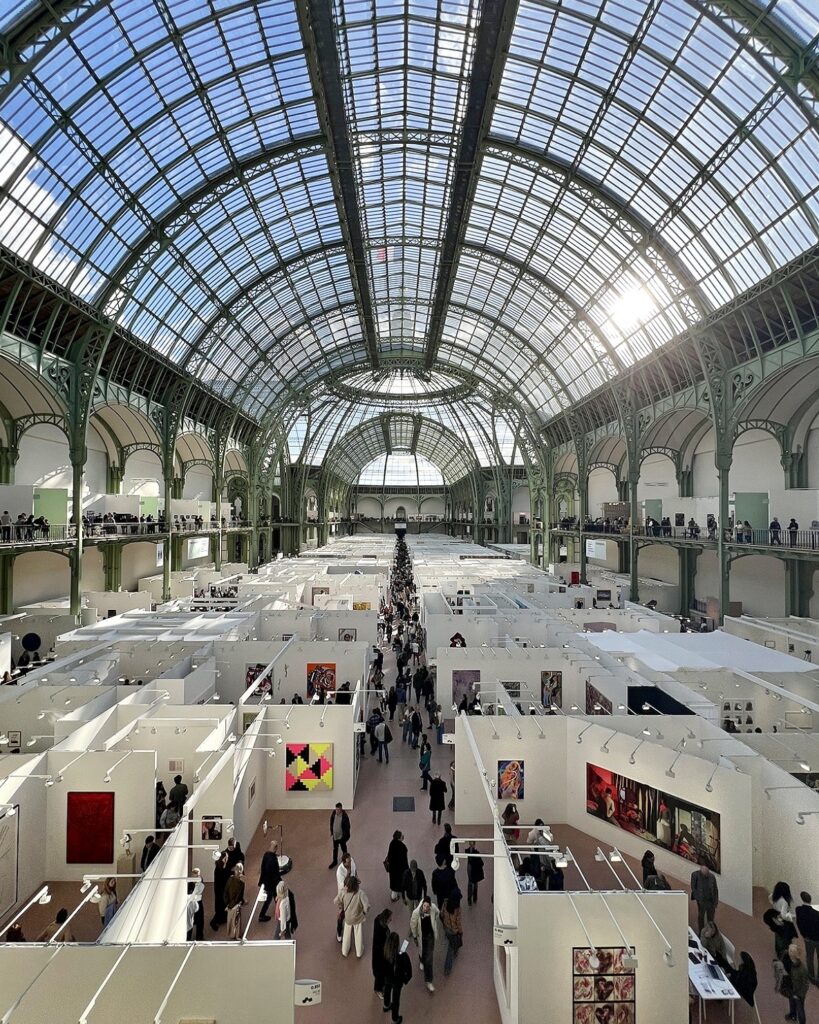
    ARCOmadrid | Art Cologne Palma | Frieze London | Art Basel – Basel / Paris / Miami Beach | Venice Biennale

    On-site advisory and curated art encounters during event hours, where curatorial insight meets guided perception.

    Private 1:1 sessions and small group immersions are available at each art event by request.

    ARCOmadrid

    Madrid, Spain

    Art Cologne Palma Mallorca

    Palma de Mallorca, Spain

    Art Basel

    Paris, France
    Basel, Switzerland
    Miami, Florida, USA

    Frieze London

    London, United Kingdom

    Venice Biennale

    Venice, Italy

    Pricing and booking

    For pricing and booking requests, please fill in the form below.

    Additional Art Services

    COLLECT by ARTIMIST
    Art advisory merging expertise and conscious collecting practices to cultivate intentional and resonant collections.

    FAQ

    What is YOURNEY?

    ARTIMIST YOURNEY is a carefully curated experience that explores the transformative power of art and self-discovery. Guided in a small group within a curated art setting, it merges immersive art encounters, resonant body–mind practices, and tailored curatorial guidance.

    Who is it for?

    Art enthusiasts, collectors, creatives, and curious individuals — anyone open to a more joyful, experiential, and personal relationship with art and self in a curated space.

    What does it involve?
    • Curated art encounters in selected museums, galleries, or studios
    • Embodied and reflective exploration of artworks to spark awareness, creativity and insight
    • Curatorial context to deepen understanding through art history and storytelling
    • Creative expression using art tools and guidance to reflect your inner world
    • Journaling and intuitive prompts to anchor your personal discoveries
    What may you experience
    • Deeper appreciation and understanding of selected visual art
    • Increased self-awareness, states of flow, creativity and emotional insight
    • Heightened presence and body-mind sensitivity
    • A sense of calm, clarity, and integration between art and life
    What’s expected of you?
    • Willingness to engage, openly and at your own pace
    • A respectful presence to support shared experience
    • No prior experience with art, creativity, or body–mind practices is required
    Can YOURNEY be adapted to various settings?

    Yes. The experience is adaptable to public, private, and online formats—ensuring accessibility and flexibility for diverse audiences, spaces, and visions.

  • ALCHEMY IN MOTION

    ALCHEMY IN MOTION

    ALCHEMY IN MOTION

    ARTIMIST x Márta Kucsora

    Date: TBA

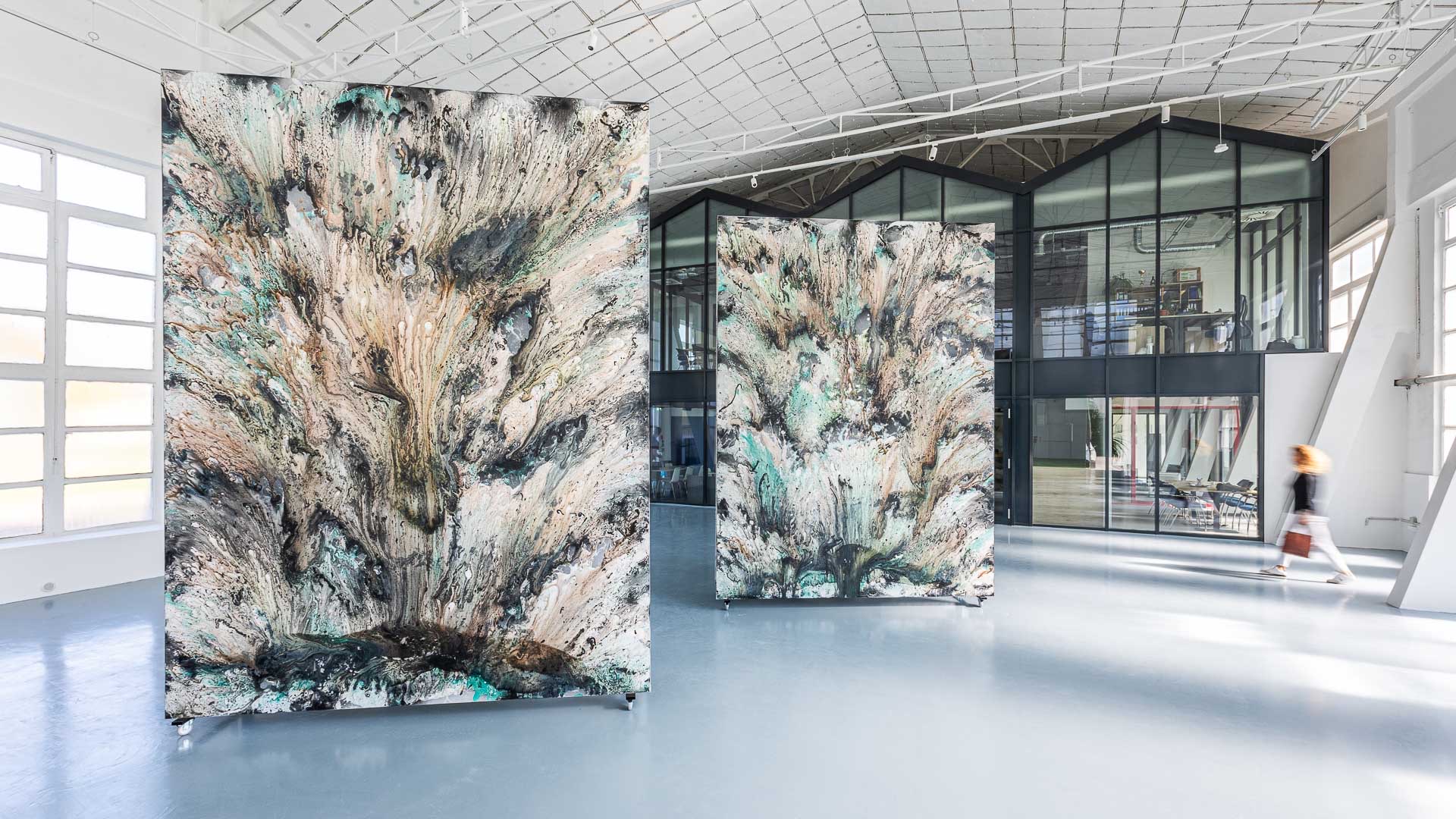
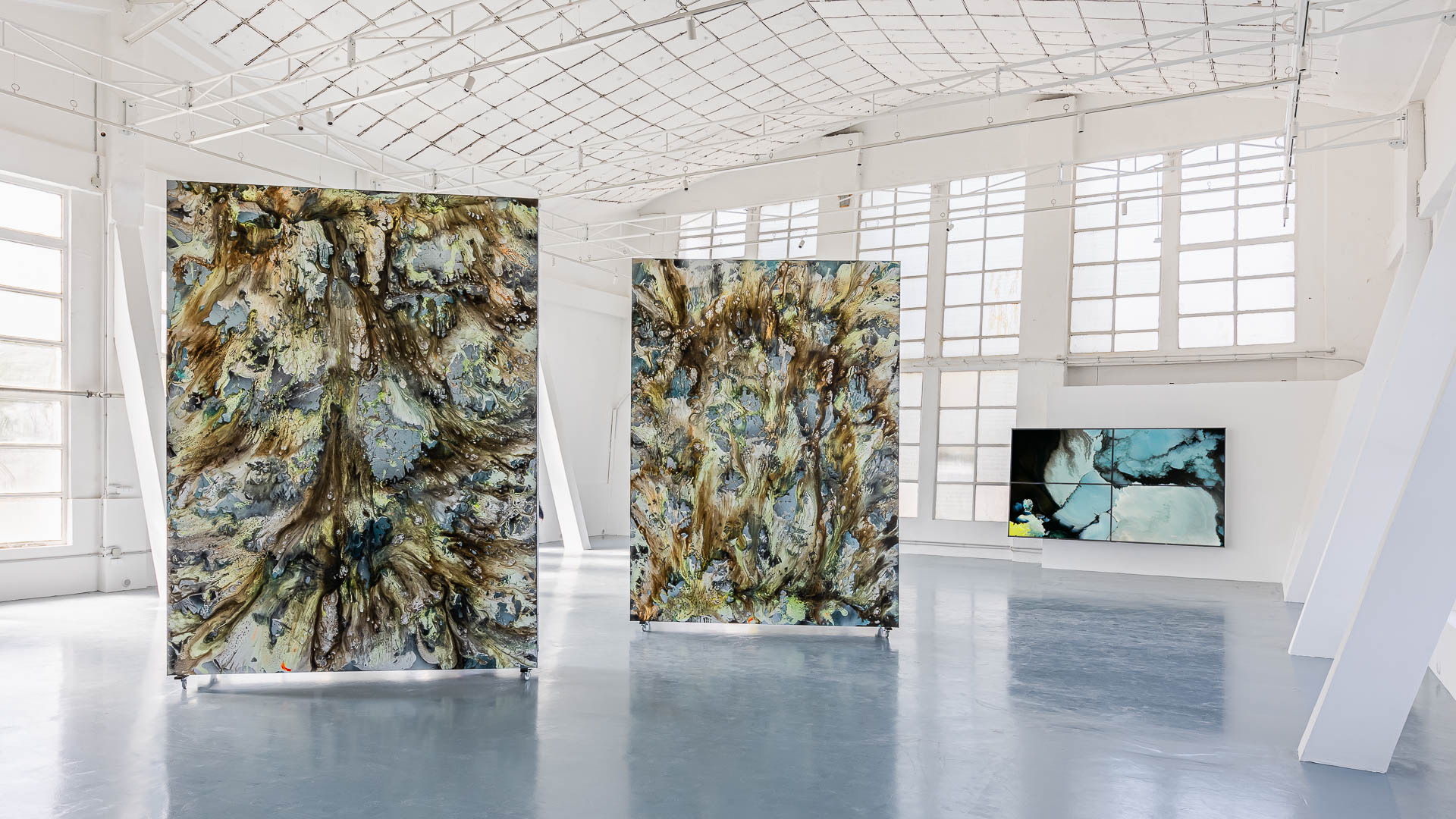
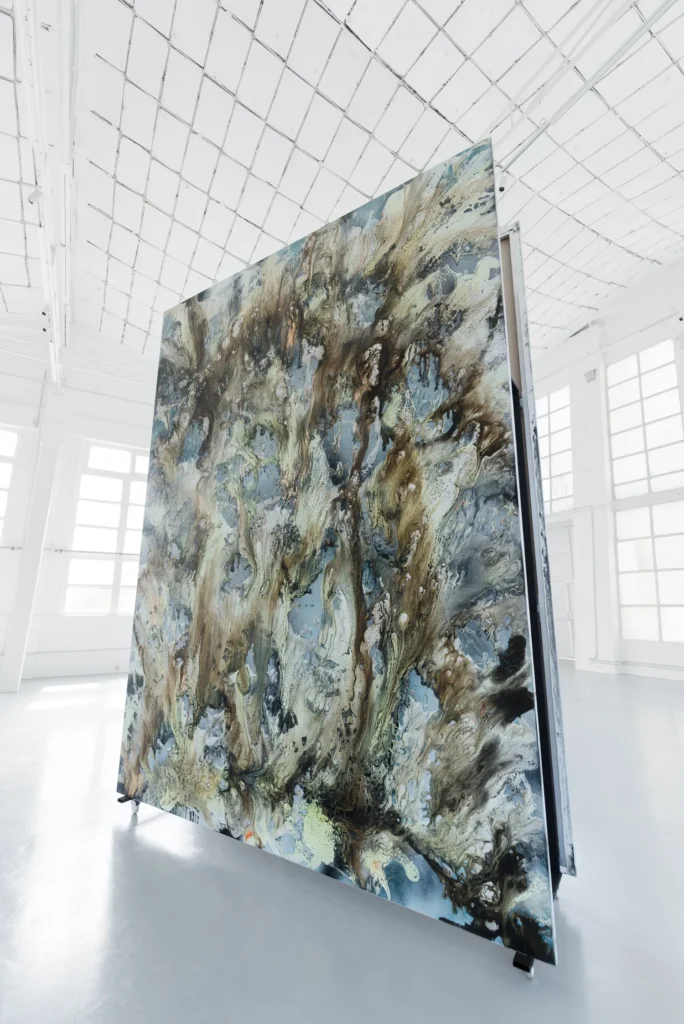
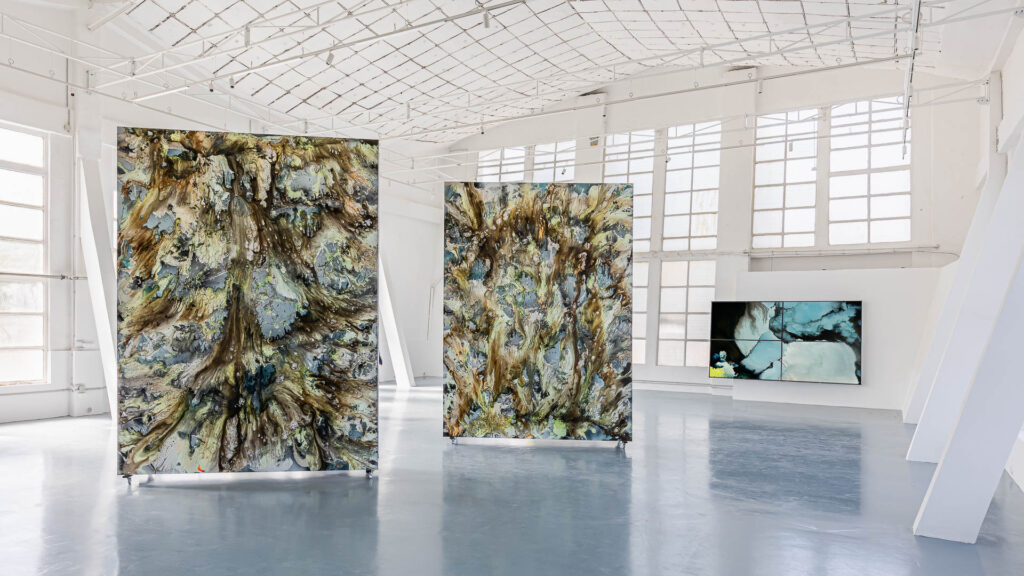
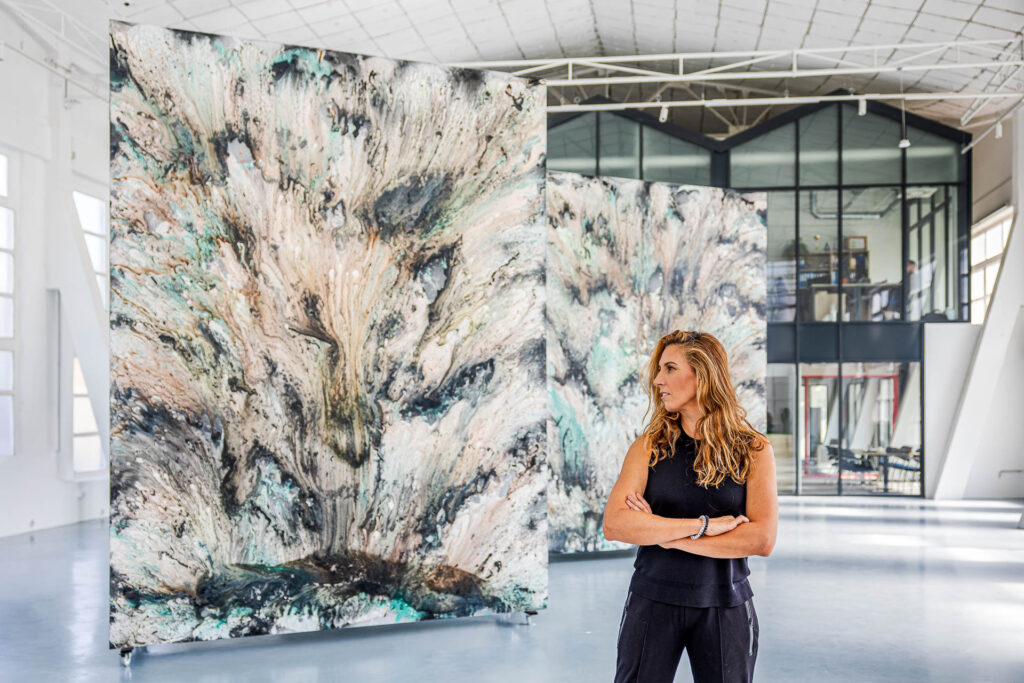
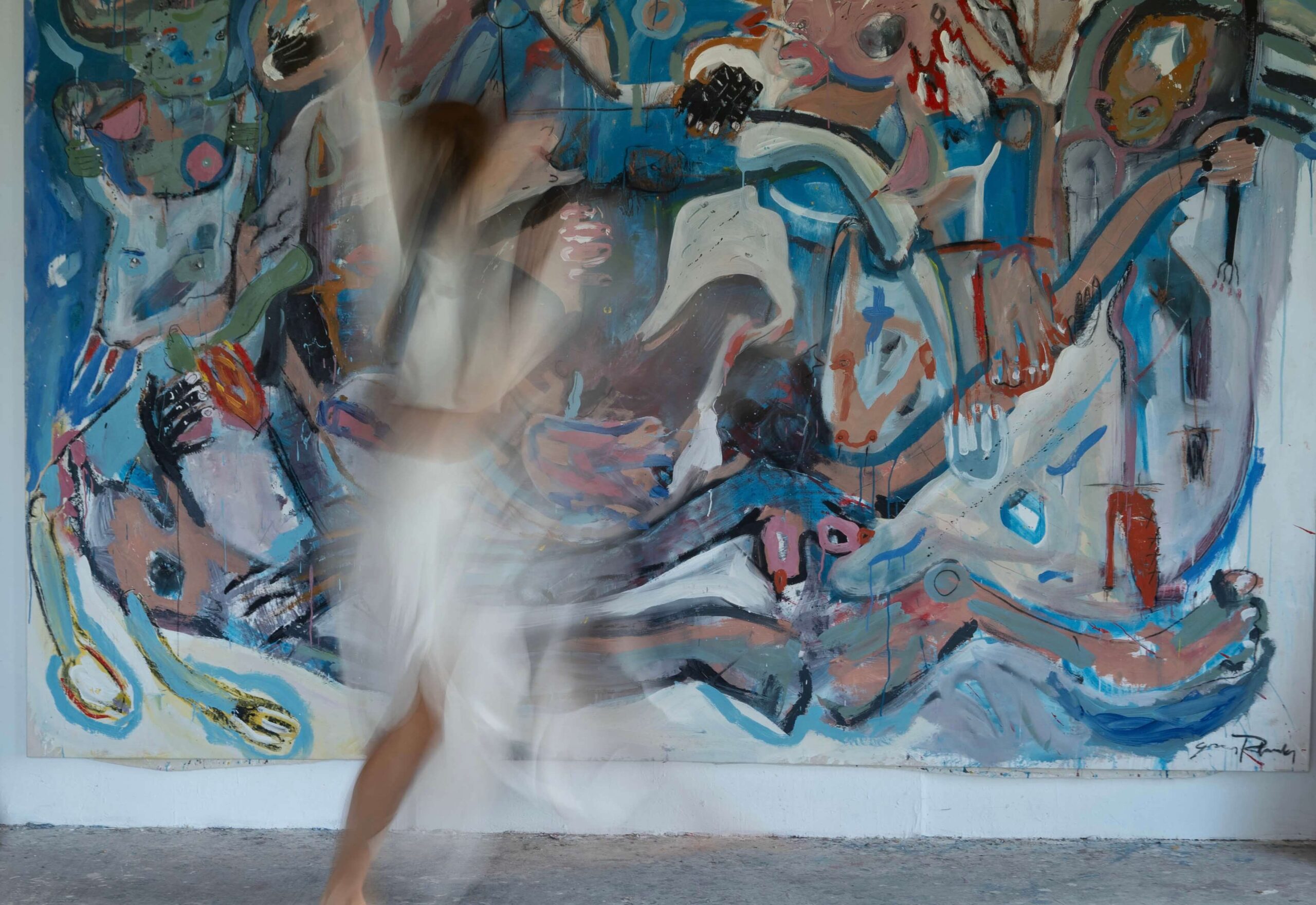
    A curated encounter with Márta Kucsora’s large-scale abstractions—where chemistry, gesture, and intuition collide. This immersive experience at the artist studio creates space for resonance, reflection and refined connection to the self and the artwork.

    Rooted in Márta’s exploration of chance, material alchemy, and gestural rhythm, the Yourney unfolds in phases. Each stage invites a unique mode of engagement—inviting presence, curiosity, creativity and dialogue between body, mind, and artwork. 

    Participants are guided beyond passive viewing into a rich sensory and emotional encounter—where breath and movement attune perception, slow looking cultivates deep resonance, and collective poetic reflection channels the fluidity and complexity of Kucsora’s paintings. 

    This intimate experience opens up a rare chance to encounter art as a living, alchemical process. 

    Designed for art enthusiasts, collectors, and those opened to a more intimate relationship with contemporary art.

    Upon request, a curated visit to selected Budapest-based artist studios may be arranged.

    About the artist

    Márta Kucsora is a Hungarian contemporary artist whose often large-scale gestural abstractions merge material experimentation with conceptual depth. Working with poured pigments, chemical reactions, and layered gestures, she creates dynamic surfaces that evoke processes of transformation, rhythm, and flux. Her process-driven practice bridges intuition and technique, drawing from both natural systems and philosophical inquiry. The result is a distinct visual language where control and chance coexist—inviting viewers into a direct, sensorial encounter with time, movement, and the evolving nature of perception.

    Born in 1979 in Szeged, Hungary, Kucsora earned her MFA from the Hungarian University of Fine Arts and completed postgraduate studies in New Jersey. She is the co-founder of Budapest Art Factory, an independent studio and international residency program. Her work has been widely exhibited in solo and group exhibitions across Europe and the U.S., and is held in notable private and institutional collections.

    EVENT Details

    Location: Budapest, artist studio

    Dates: TBA

    Group size: Limited to 15 participants 

    Hosted by ARTIMIST, with the artist present for Q&A

    Guidance: Kristína Jarošová—founder of ARTIMIST, curator, and experiential guide. Guided in English.

    Selected artworks available for acquisition. Click here to request the list and pricing details.

    Private Artimist Yourney: Available by request only.

    FAQ

    What is YOURNEY?

    ARTIMIST YOURNEY is a carefully curated experience that explores the transformative power of art and self-discovery. Guided in a small group within a curated art setting, it merges immersive art encounters, resonant body–mind practices, and tailored curatorial guidance.

    Who is it for?

    Art enthusiasts, collectors, creatives, and curious individuals — anyone open to a more joyful, experiential, and personal relationship with art and self in a curated space.

    What does it involve?
    • Curated art encounters in selected museums, galleries, or studios
    • Embodied and reflective exploration of artworks to spark awareness, creativity and insight
    • Curatorial context to deepen understanding through art history and storytelling
    • Creative expression using art tools and guidance to reflect your inner world
    • Journaling and intuitive prompts to anchor your personal discoveries
    What may you experience
    • Deeper appreciation and understanding of selected visual art
    • Increased self-awareness, states of flow, creativity and emotional insight
    • Heightened presence and body-mind sensitivity
    • A sense of calm, clarity, and integration between art and life
    What’s expected of you?
    • Willingness to engage, openly and at your own pace
    • A respectful presence to support shared experience
    • No prior experience with art, creativity, or body–mind practices is required
    Can YOURNEY be adapted to various settings?

    Yes. The experience is adaptable to public, private, and online formats—ensuring accessibility and flexibility for diverse audiences, spaces, and visions.

  • Manifest

    Manifest

    Documentary film series
    Initiated and produced by Kristína Jarošová

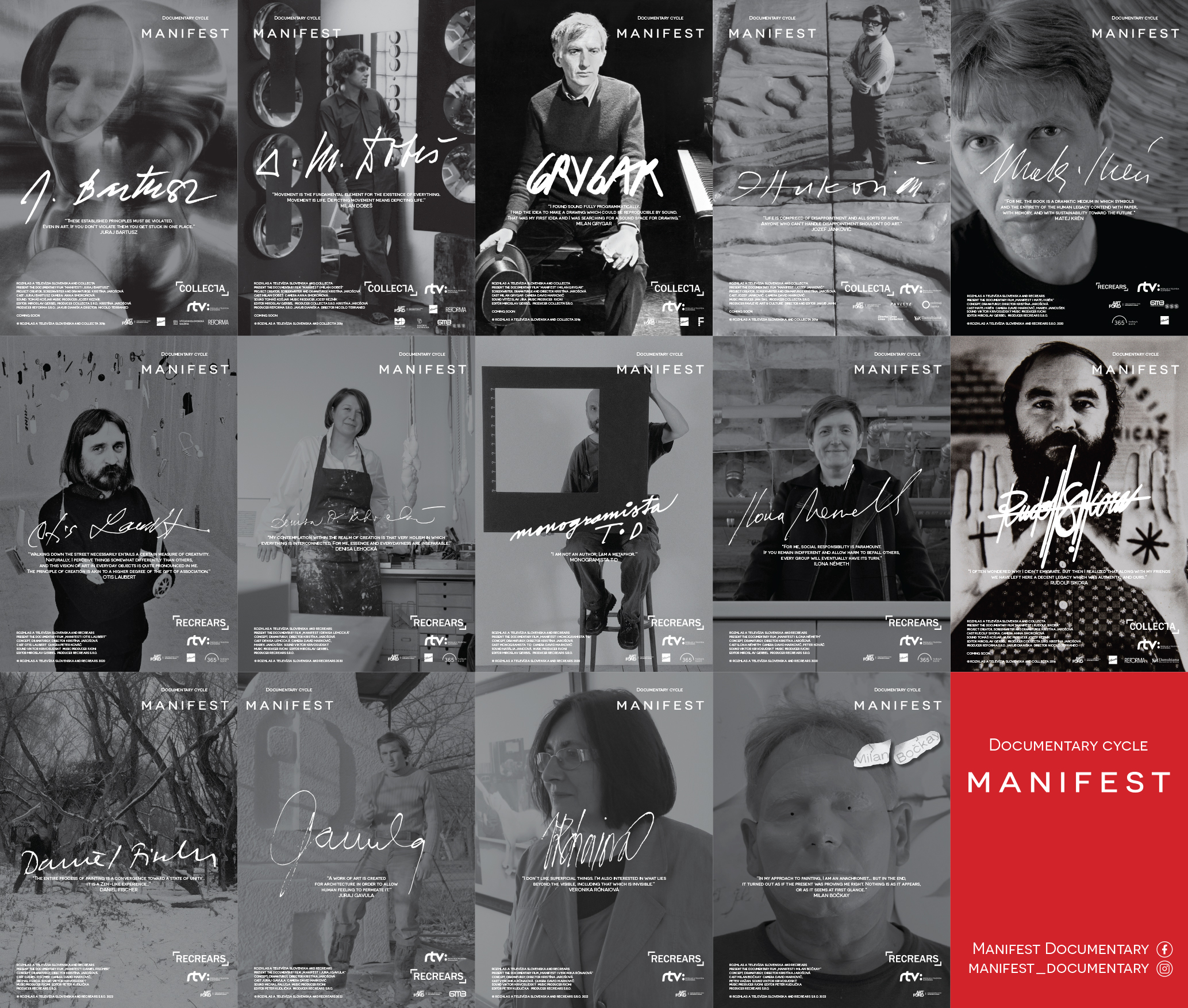
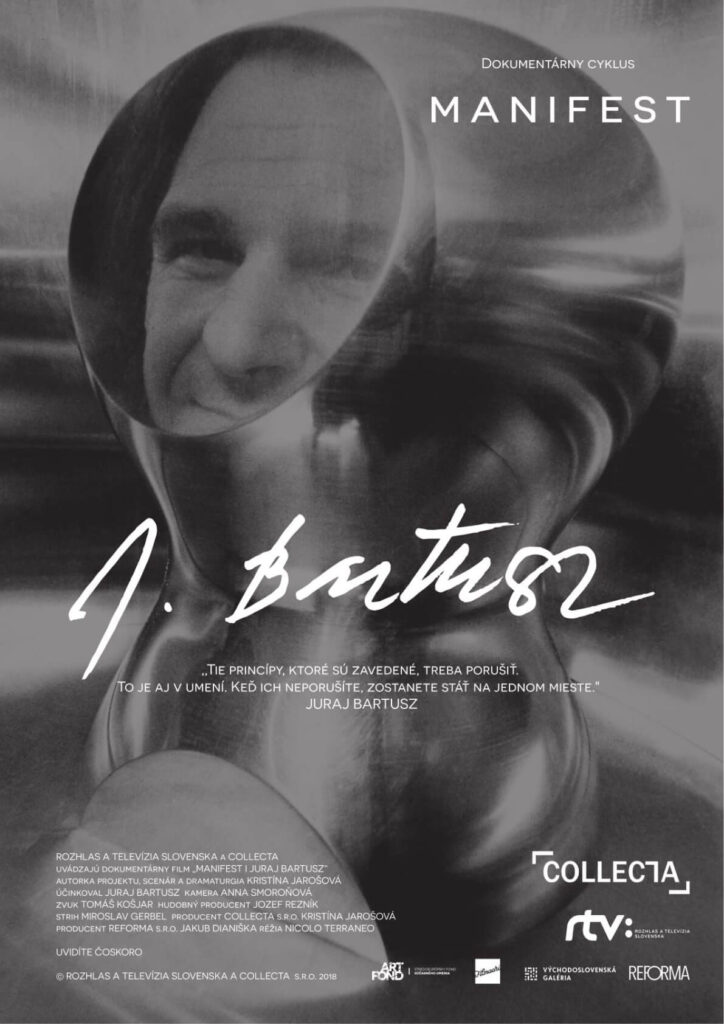
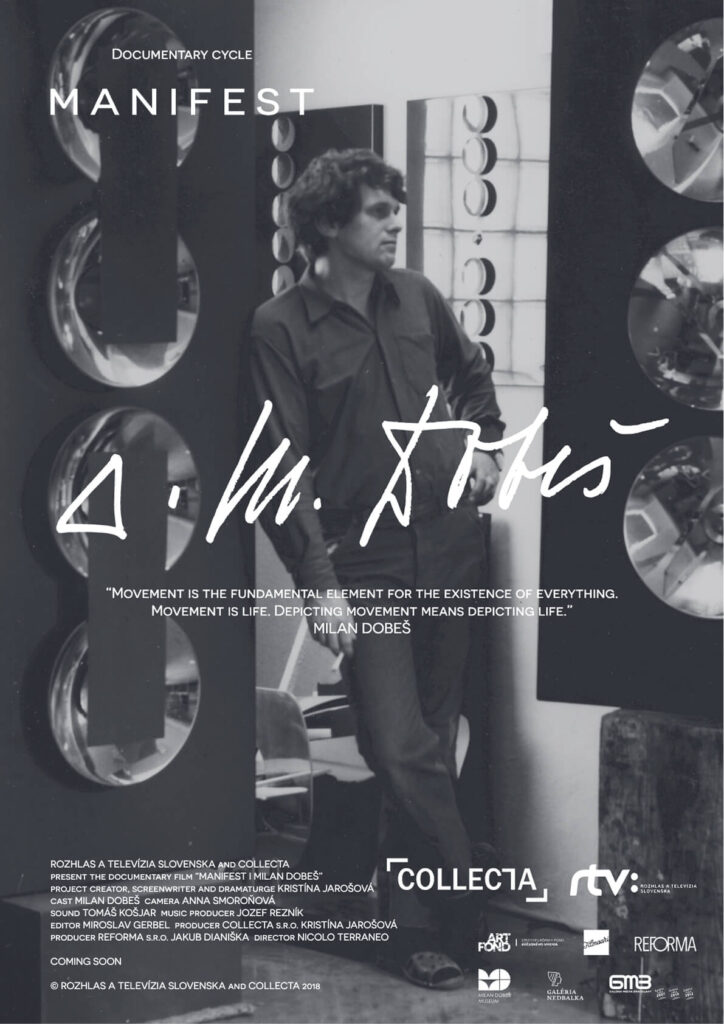
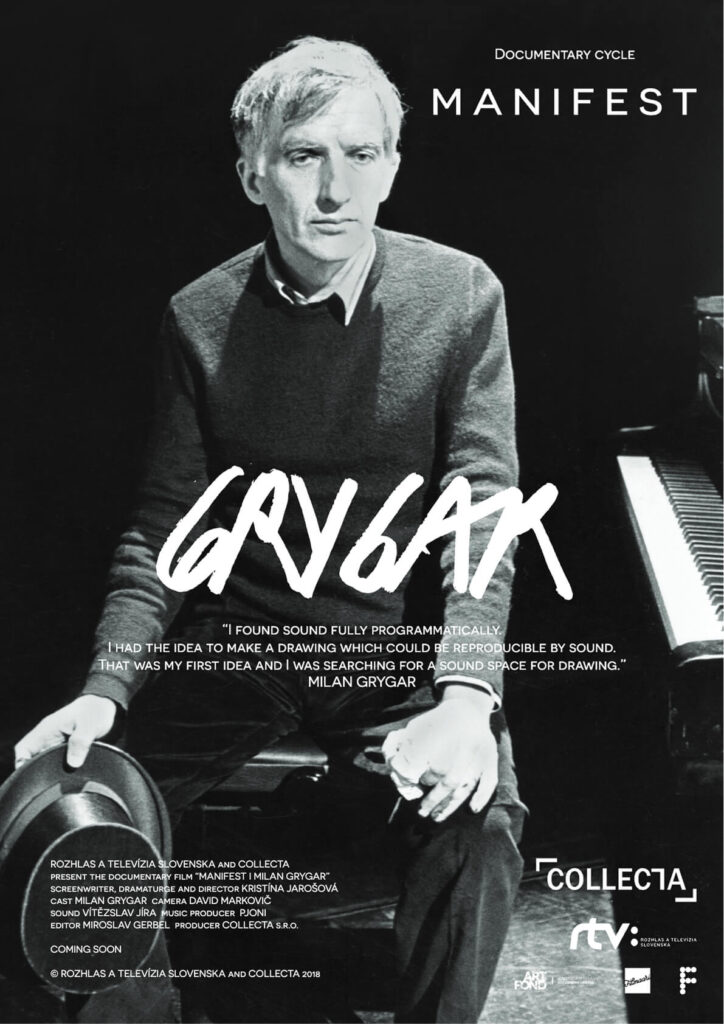
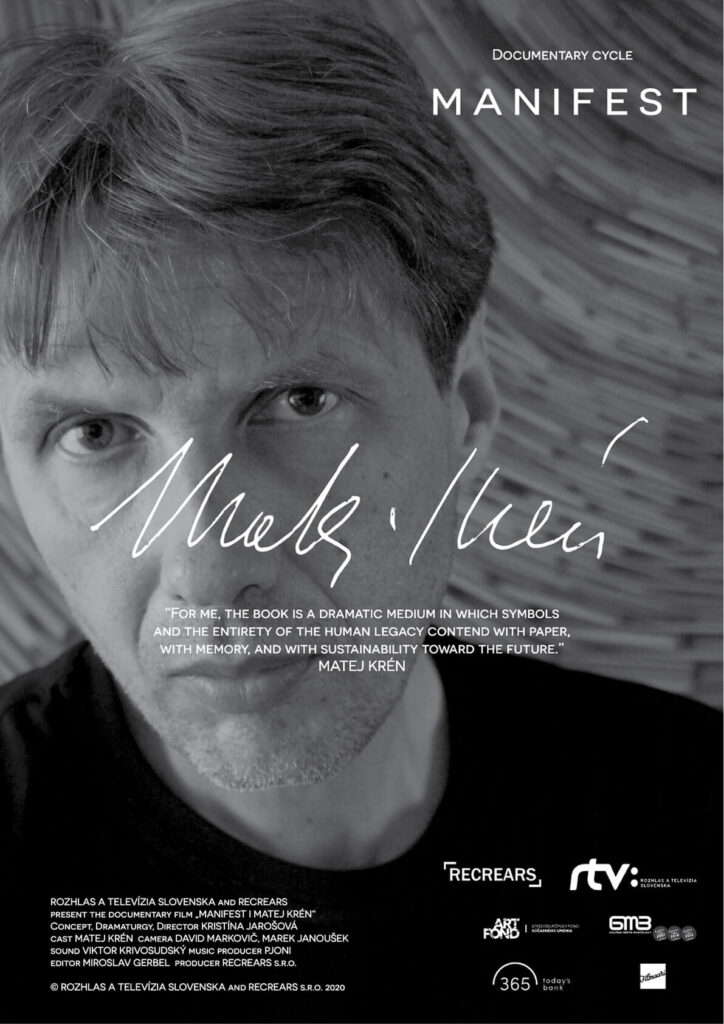
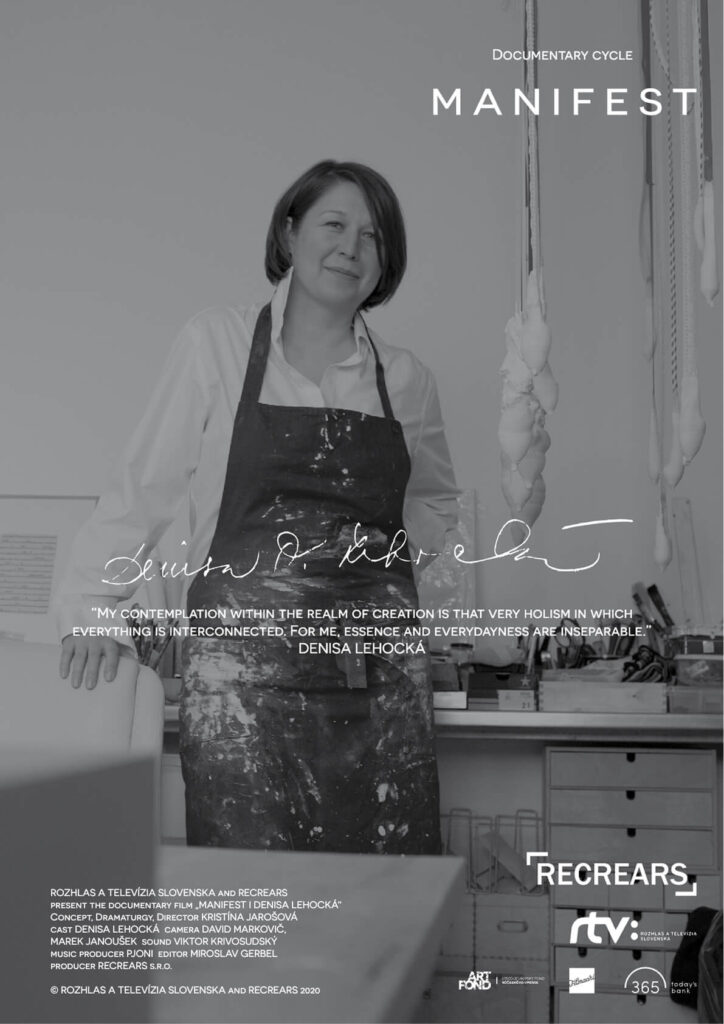
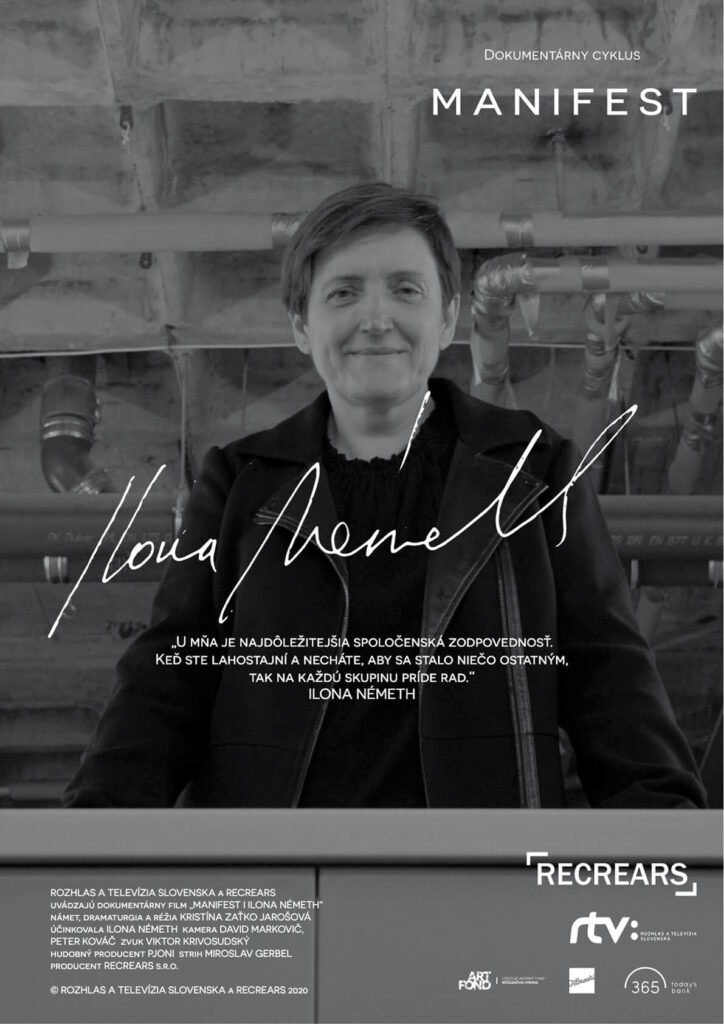
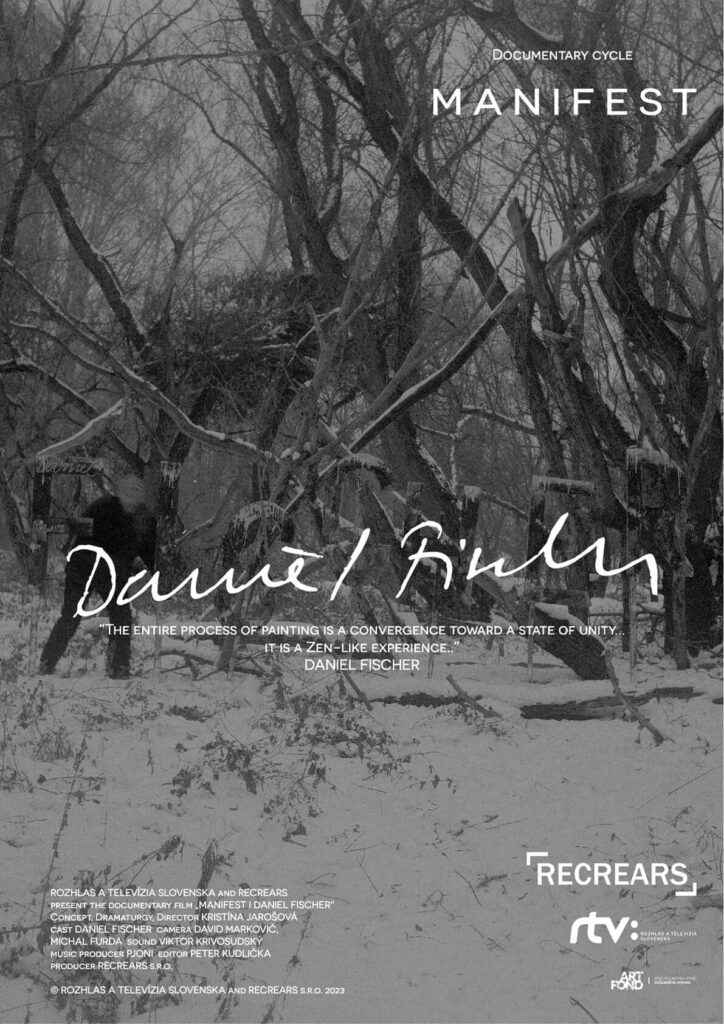
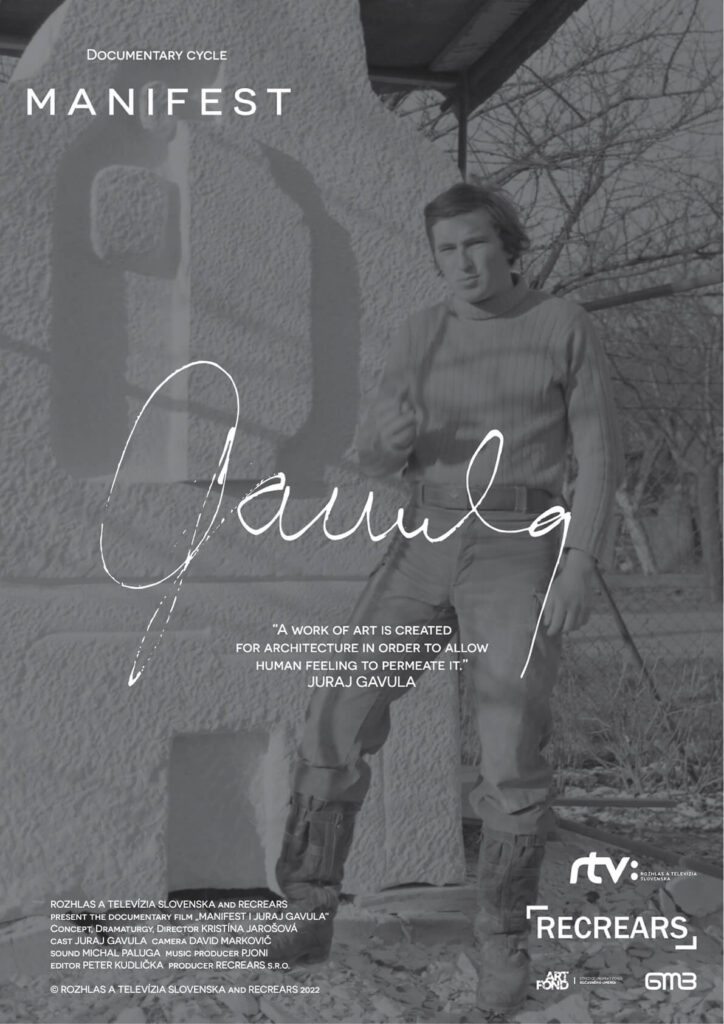
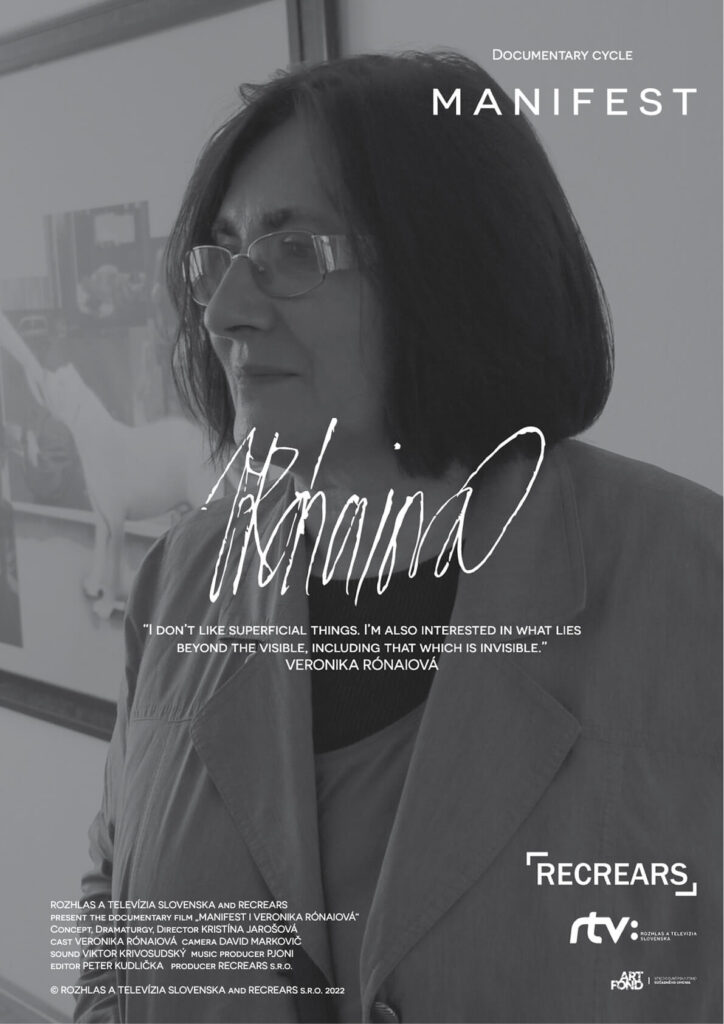
    MANIFEST is a documentary series spotlighting key Slovak and Czech visual artists from 1960 to the present.

    Across 15 short films, it captures the creative paths of artists who, often working outside official institutions, significantly influenced contemporary art. The series offers a unique window into their ideas, practices, and contributions to international movements—preserving their legacy through powerful visual storytelling.

    Read more

    Many of these artists were part of the unofficial art scene and managed to radically influence the development of visual art—spanning painting, object art, multimedia environments, and action art. Their inspiring work authentically reflects contemporary international movements such as Neo-Avant-Garde, New Realism, Pop Art, Kinetic Art, and Conceptual Art, contributing to their significant recognition both locally and internationally.

    Film Festival Awards:
    Hollywood International Independent Documentary Festival
    Fine Arts Film Festival – Los Angeles, USA
    On Art – Poland


    Manifests

    Juraj Bartusz

    Milan Dobeš

    Milan Grygar

    Jozef Jankovič

    Matej Krén

    Otis Laubert

    Denisa Lehocká

    Dezider Tóth

    Ilona Németh

    Rudolf Sikora

    Daniel Fischer

    Juraj Gavula

    Veronika Rónaiová

    Milan Bočkay

  • INTO THE TEMPLE OF THE DEEP

    INTO THE TEMPLE OF THE DEEP

    INTO THE TEMPLE OF THE DEEP

    ARTIMIST x Miguel Arraiz

    26 August 2025

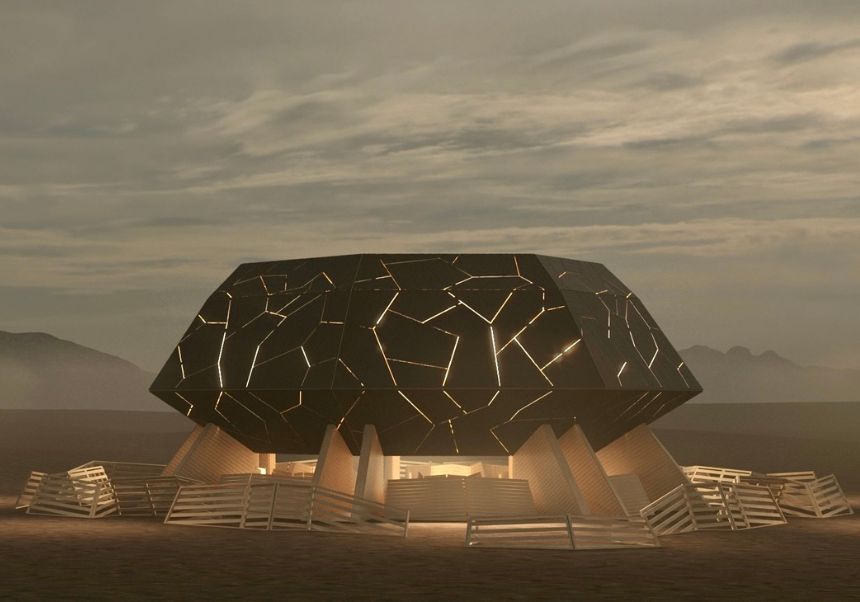
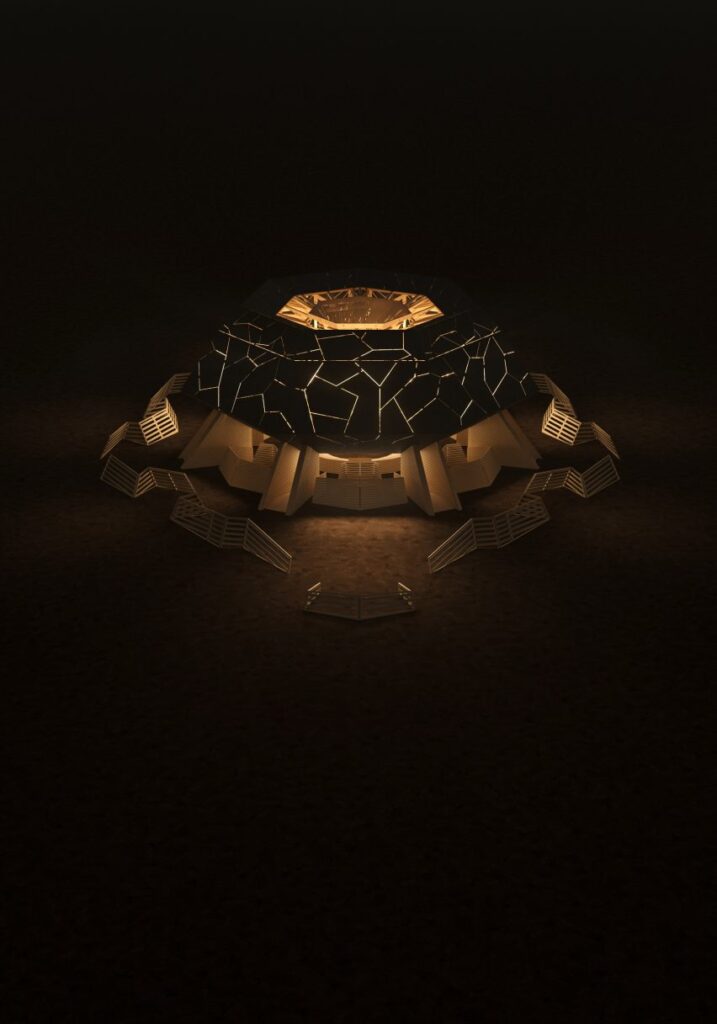
    A guided inner exploration inspired by the core themes of Burning Man 2025’s official Temple—transformation, the beauty of imperfection, the art of kintsugi, and collective healing—through presence, resonant body–mind practices, curatorial insight, and hands-on creation.

    This intimate journey begins at Polaris Camp, inviting participants to reflect, sense, and connect deeply with the themes of the Temple as a lived experience—felt through the body, shaped by the mind, and expanded through creative expression. Rooted in the philosophy of kintsugi—the Japanese art of mending brokenness with gold—this process honors fractures and imperfections as integral parts of a beautiful whole. It becomes a transformative act, turning what has been broken into something newly meaningful and precious.

    A silent bike ride to the Temple follows, supported by printed poetic prompts and set intentions to deepen the experience. In shared silence, participants are invited to leave a personal offering—an art piece created during the workshop, a golden thread, a written note, or even a breath—acknowledging what has been revealed.

    We observe. We pause. We create. We reflect.
    We let the light enter through the cracks.
    We wait for the meaning to arrive.

    In that space, something shifts—
    an emotion, a moment of clarity,
    a quiet revelation…

    About the artist

    Miguel Arraiz is a Spanish architect and artist based in Valencia, whose creative practice bridges ephemeral architecture, ritual, and emotional storytelling. Deeply influenced by the Fallas tradition—where monumental sculptures are ceremonially burned—his work explores the power of collective memory and transformation through impermanence.

    In 2016, he brought Renaixement, a large-scale wooden installation, to Burning Man, marking his debut on the playa. For 2025, Arraiz was selected as the lead artist of Temple of the Deep, the official Burning Man Temple—a first for a Spanish architect.

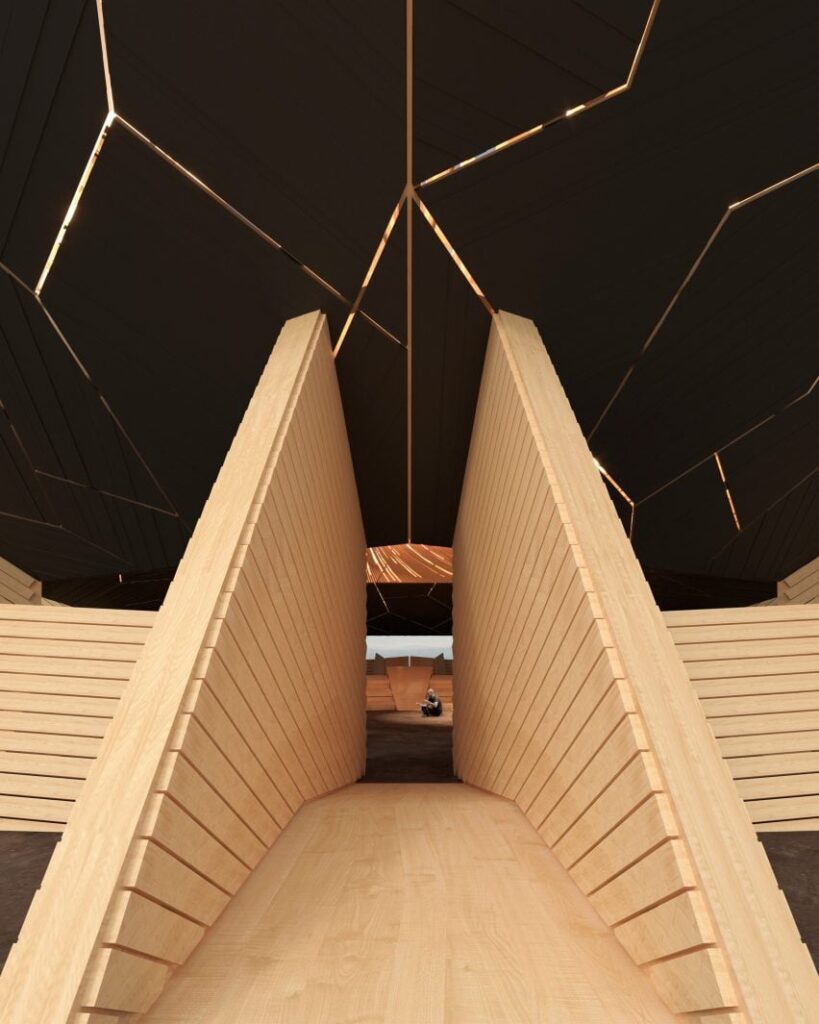
    Inspired by the natural geology of the Black Rock Desert and the Japanese philosophy of kintsugi (repairing what is broken with gold), the Temple’s fractured, cavernous form invites participants into a journey of grief, beauty, and renewal. Designed with seven entrances reflecting the stages of grief and a communal agora at its center, the structure merges symbolic form with spatial poetry.

    Created with over 400 collaborators and constructed under extreme desert conditions, Temple of the Deep embodies Arraiz’s vision of architecture as ritual space for healing—where memory, material, and meaning converge in shared silence, culminating in the sacred act of its final burn.

    EVENT Details

    Location: Burning Man, begins at Polaris Camp (2:15 & E), followed by a silent bike ride to the Temple

    Dates: Tuesday, Aug 26 @ 4:00 – 5:00 PM

    Facilitators: Kristína Jarošová — founder of ARTIMIST, curator, and experiential guide Margo Trushina, artist and sculptor

    Hosted by ARTIMIST

    Art materials provided

    This journey is a complimentary offering.

    FAQ

    What is YOURNEY?

    ARTIMIST YOURNEY is a carefully curated experience that explores the transformative power of art and self-discovery. Guided in a small group within a curated art setting, it merges immersive art encounters, resonant body–mind practices, and tailored curatorial guidance.

    Who is it for?

    Art enthusiasts, collectors, creatives, and curious individuals — anyone open to a more joyful, experiential, and personal relationship with art and self in a curated space.

    What does it involve?
    • Curated art encounters in selected museums, galleries, or studios
    • Embodied and reflective exploration of artworks to spark awareness, creativity and insight
    • Curatorial context to deepen understanding through art history and storytelling
    • Creative expression using art tools and guidance to reflect your inner world
    • Journaling and intuitive prompts to anchor your personal discoveries
    What may you experience
    • Deeper appreciation and understanding of selected visual art
    • Increased self-awareness, states of flow, creativity and emotional insight
    • Heightened presence and body-mind sensitivity
    • A sense of calm, clarity, and integration between art and life
    What’s expected of you?
    • Willingness to engage, openly and at your own pace
    • A respectful presence to support shared experience
    • No prior experience with art, creativity, or body–mind practices is required
    Can YOURNEY be adapted to various settings?

    Yes. The experience is adaptable to public, private, and online formats—ensuring accessibility and flexibility for diverse audiences, spaces, and visions.

  • ALCHEMY IN MOTION

    ALCHEMY IN MOTION

    ALCHEMY IN MOTION

    ARTIMIST x Márta Kucsora

    22 & 23 November 2025

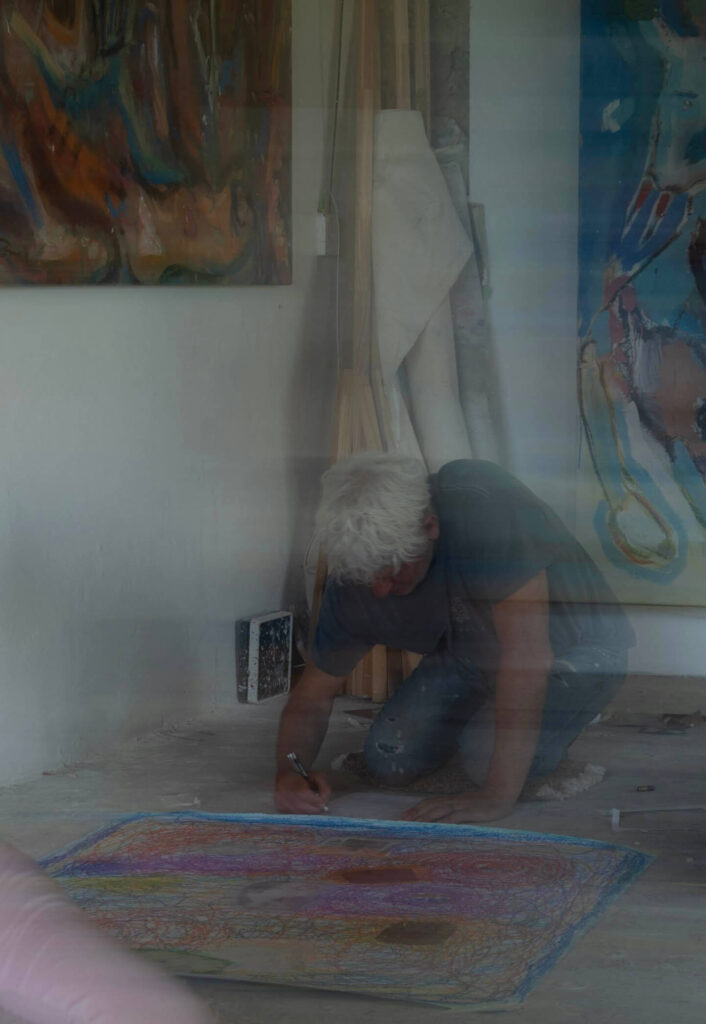
    Step behind the scenes of the Budapest art scene to connect directly with artists, collectors, and curators—culminating in an immersive session inside Márta Kucsora’s studio.

    A curated encounter with Márta Kucsora’s large-scale abstractions—where chemistry, gesture, and intuition collide. This immersive experience at the artist studio creates space for resonance, reflection and refined connection to the self and the artwork.

    Rooted in Márta’s exploration of chance, material alchemy, and gestural rhythm, the Yourney unfolds in phases. Each stage invites a unique mode of engagement—inviting presence, curiosity, creativity and dialogue between body, mind, and artwork. 

    Participants are guided beyond passive viewing into a rich sensory and emotional encounter—where breath and movement attune perception, slow looking cultivates deep resonance, and collective poetic reflection channels the fluidity and complexity of Kucsora’s paintings. 

    This intimate experience opens up a rare chance to encounter art as a living, alchemical process. 

    Designed for art enthusiasts, collectors, and those opened to a more intimate relationship with contemporary art.

    About the artist

    Márta Kucsora is a Hungarian contemporary artist whose often large-scale gestural abstractions merge material experimentation with conceptual depth. Working with poured pigments, chemical reactions, and layered gestures, she creates dynamic surfaces that evoke processes of transformation, rhythm, and flux. Her process-driven practice bridges intuition and technique, drawing from both natural systems and philosophical inquiry. The result is a distinct visual language where control and chance coexist—inviting viewers into a direct, sensorial encounter with time, movement, and the evolving nature of perception.

    Born in 1979 in Szeged, Hungary, Kucsora earned her MFA from the Hungarian University of Fine Arts and completed postgraduate studies in New Jersey. She is the co-founder of Budapest Art Factory, an independent studio and international residency program. Her work has been widely exhibited in solo and group exhibitions across Europe and the U.S., and is held in notable private and institutional collections.

    EVENT Details

    Location: Budapest, artist studio

    Dates: November 22 (3 – 5pm)

                November 23 (11am – 1pm)

    Group size: Limited to 15 participants 

    Hosted by ARTIMIST, with the artist present for Q&A

    Guidance: Kristína Jarošová—founder of ARTIMIST, curator, and experiential guide

    Selected artworks available for acquisition. Click here to request the list and pricing details.

    Private Artimist Yourney: Available by request only.

    FAQ

    What is YOURNEY?

    ARTIMIST YOURNEY is a carefully curated experience that explores the transformative power of art and self-discovery. Guided in a small group within a curated art setting, it merges immersive art encounters, resonant body–mind practices, and tailored curatorial guidance.

    Who is it for?

    Art enthusiasts, collectors, creatives, and curious individuals — anyone open to a more joyful, experiential, and personal relationship with art and self in a curated space.

    What does it involve?
    • Curated art encounters in selected museums, galleries, or studios
    • Embodied and reflective exploration of artworks to spark awareness, creativity and insight
    • Curatorial context to deepen understanding through art history and storytelling
    • Creative expression using art tools and guidance to reflect your inner world
    • Journaling and intuitive prompts to anchor your personal discoveries
    What may you experience
    • Deeper appreciation and understanding of selected visual art
    • Increased self-awareness, states of flow, creativity and emotional insight
    • Heightened presence and body-mind sensitivity
    • A sense of calm, clarity, and integration between art and life
    What’s expected of you?
    • Willingness to engage, openly and at your own pace
    • A respectful presence to support shared experience
    • No prior experience with art, creativity, or body–mind practices is required
    Can YOURNEY be adapted to various settings?

    Yes. The experience is adaptable to public, private, and online formats—ensuring accessibility and flexibility for diverse audiences, spaces, and visions.

  • Dream!?

    Dream!?

    A probe into the ART FOND Collection

    Exhibition: Group Exhibition
    Curators: Kristína Jarošová and Beata Jablonská
    Location: Bratislava City Gallery, Slovakia
    Date: 2020

    _8502582
    _8502661
    _8502689
    _8502709
    _8502824
    _8502850
    _8502923
    _8502957
    _8502960
    _8502969
    _8503007
    _8503023
    12_8502592-95Panorama
    38_8502804-07Panorama
    51_850288788Panorama
    56_8502918-21Panorama
    58_8502942-46Panorama
    64_8503035-40Panorama
    previous arrow
    next arrow

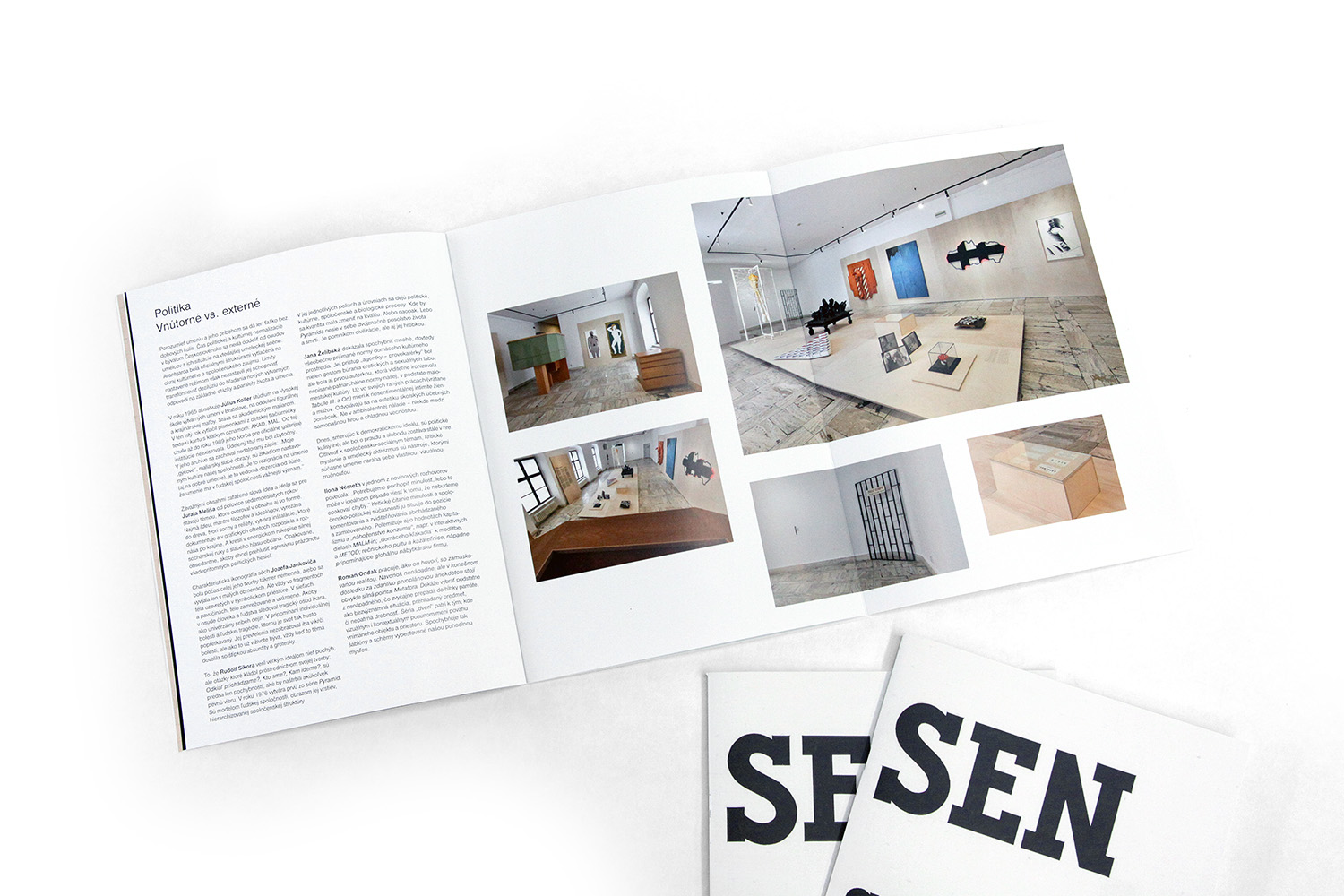
    The exhibition entitled DREAM!? features a unique presentation of the works of key Slovak visual artists who emerged on the art scene in the 1960s up to the “post-November” generation of the 1990s. It is based on artwork reflecting the easing of social and political tensions during the Prague Spring (1968) in former socialist Czechoslovakia. In those briefly “liberated” times, the art scene fought for and achieved avant-garde self-confidence and an unparalleled authenticity. These qualities, which fundamentally shaped the art of the alternative—unofficial—scene, later influenced the predominantly neo-conceptual work of younger generations of visual artists.

    The visionary bravery and radical artistic expression of these artists were not extinguished by the measures of the subsequent period of Normalization, which often led to their exclusion from official art circles. Despite their nonconformist approaches frequently facing censorship, systematic intimidation, and misunderstanding, they persevered and continued to create within the limited conditions of parallel cultural society.

    Thanks to their ability to create their own frameworks—internal exile—they found fertile ground and space for dreaming and free contemplation. The reality of these “cast-out” artists has survived in their work to this day, not as superficial resistance but rather in meditative explorations of threshold values of the absolute and the transcendent, as well as in the artistic visualization of subtle lived moments and situations. Themes related to intimacy, ecology, cosmology, acoustic-visual relationships, and feminism also take center stage. Their unconventional creative expression features specific humor, irony, distinctive visual poetics, intermediality, and the blurring of boundaries between “low” and “high” art.

    DREAM!? seeks to trace the path of artistic escape and the conviction that a civilization founded on humanistic ideals is more than just a utopian dream. Through powerful metaphorical and critical thinking, it does not remain at the level of romantic daydreaming but serves as a reflection on the social, political, and cultural realities of its time.

    Read more

    The title of this exhibition was inspired by a 1979 letter written by artist and theorist Robert Cyprich to Czech artist Petr Štembera:

    “In the words of Balzac, each of us wanted to change this world for a moment. Unfortunately, I no longer feel like doing so. I just want to help people dream. Yes, I am a professional in human dreams. The shoemaker puts shoes on people’s feet, the barber cuts their hair, and I try to help them dream. What can you give people today?…

    POUR OUT THE PINK PAINT AND GILD THE SKIES!”

    Today, several decades later, the work of “his” generation—artists who shared a common sense of being outsiders within the visual art scene and society at large—stands as one of the key chapters of our art history and has left a significant mark on the international art scene. Not only due to its artistic value but also because of its existential message, which remains as urgent as ever.

    Today’s world is an intricate matrix of climatic and pandemic crises, exhausted traditional social systems, and the dwindling likelihood that the future can be built solely on past experiences. Thus, dreaming—or rethinking the world in a radical way, without predetermined outcomes—becomes not only a possibility but a necessity.

    The Art Fond collection has created an exhibition narrative for the Bratislava City Gallery, portraying a vision of ostracized art while focusing on both its visible and hidden aspects. Unlike the Western art scene, where formal and market-driven concerns often dominated, these works emerged from a deeply personal search for the essence of the relationship between artist and art—not only on an artistic level but also on ethical, social, and ecological levels. However, the curators of the collection do not seek to confine its artistic significance and societal relevance to a historical framework. On the contrary, its pertinence lies in direct dialogue with the present, as seen in the works of contemporary artists selected within the collection’s conceptual framework.

    The exhibition is divided into five thematic chapters, each presenting the local and global contexts of individual works:

    (MY) UNIVERSE
    POETRY OF EVERYDAYNESS. POEM – IMAGE – SOUND
    POLITICS. THE INTERNAL vs. THE EXTERNAL
    NATURE. NATURE AS A LIBERATED STUDIO
    HIDDEN IN THE INTIMATE. IN TOUCH. IN ONESELF. IN SILENCE.

    Exhibiting artists: Milan Adamčiak, Peter Bartoš, Juraj Bartusz, Mária Bartuszová, Milan Dobeš, Stano Filko, Milan Grygar, Jozef Jankovič, Igor Kalný, Michal Kern, Július Koller, Otis Laubert, Denisa Lehocká, Juraj Meliš, Alex Mlynárčik, Ilona Németh, Roman Ondak, Rudolf Sikora, Dezider Tóth / Monogramista T.D, Jana Želibská

    Text by: Kristína Jarošová and Beata Jablonská

  • …AND QUIETLY THE NIGHT ARRIVES

    …AND QUIETLY THE NIGHT ARRIVES

    Exhibition: Group Exhibition
    Curators: Kristína Jarošová and Patrick Steinhauser
    Location: ZOYA Gallery, Slovakia
    Date: 2024

    art-night-1
    art-night-2
    art-night-3
    art-night-4
    art-night-5
    art-night-6
    art-night-7
    art-night-8
    art-night-9
    art-night-10
    art-night-11
    art-night-12
    art-night-13
    art-night-14
    art-night-15
    art-night-16
    art-night-17
    art-night-18
    art-night-19
    art-night-20
    previous arrow
    next arrow

    …AND QUIETLY THE NIGHT ARRIVES.

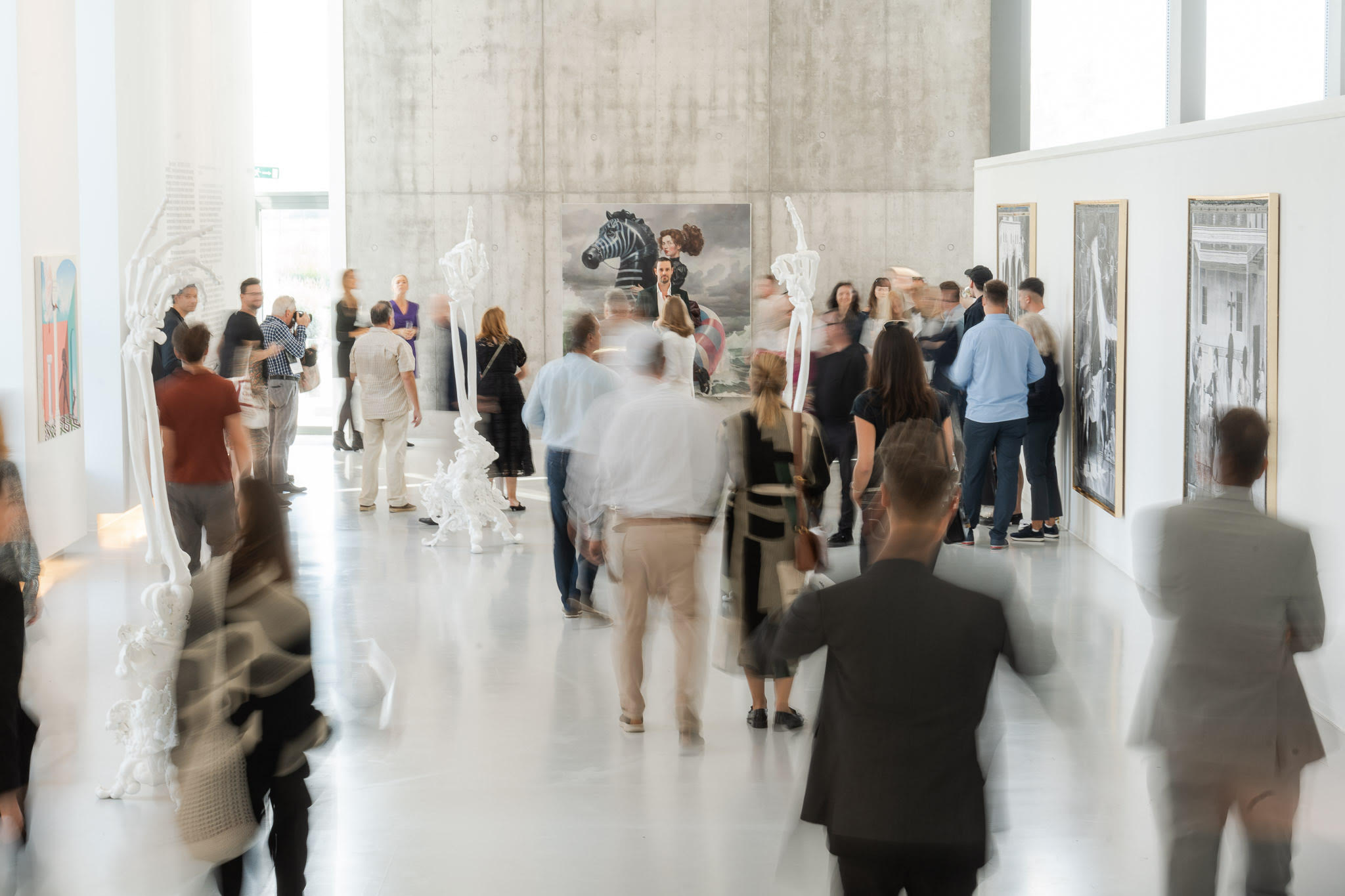
    The exhibition …AND QUIETLY THE NIGHT ARRIVES presents twelve international artists exploring perspectives on the aesthetics of darkness, melancholy, mythology, and imagination. In a symbolic and surreal manner, the night serves as a metaphor through which ordinary modes of perception are disrupted and hidden aspects of existence are revealed. As Jean-Luc Nancy writes in The Ground of the Image, the nocturnal is a space where forms slip from their anchorages and, to a certain extent, become invisible. In this realm, the impossibility of seeing coincides with the possibility of imagining—challenging our perceptions to open toward alternative ways of thinking and understanding.

    With imagination unleashed and the boundaries of reality blurred, these artists delve into the depths of thought, dreams, the subconscious, and memory through diverse strategies of creation, recontextualization, manipulation, and appropriation. Drawing on rich sources of inspiration, a strong pictorial sensibility, and refined craftsmanship, they question fixed truths while emphasizing the importance of forming new contexts and identities.

    Read more

    Through their thought-provoking and visually striking works, the artists explore the interplay between fantasy and reality, the conscious and the unconscious, past and present, authenticity and imitation, as well as the shifting boundaries of identity. Poetically yet powerfully, they illuminate humanity’s obscure corners—raising themes of power structures, social inequality, and the intricate relationships between humans, history, and nature.

    These ephemeral, intense situations often portray figures suspended in a disjointed space-time continuum, seemingly detached from linear or passing time. Wandering without fixed narratives or directions, they reflect the contradictory moods of society and evoke feelings of estrangement, vulnerability, and melancholy. As Theodor W. Adorno observed in Minima Moralia, such emotions arise in response to the contradictions and injustices embedded in the social order. The impact of capitalist structures and bureaucratic systems can be sensed in the mourning for lost human connection, suppressed creativity, and the erosion of individuality within a homogenized culture. Within this context, the artists unravel the intimate bond between personal experience and the societal forces that shape it.

    The works in this exhibition ignite curiosity, stimulate imagination, and spark critical reflection. They open pathways beyond the familiar and the expected, using the symbolism of night as a portal into transformation and creative depth. By revealing what lies hidden in darkness, the artists invite us to look beyond the surface—to inhabit a liminal space where the known collapses, and new possibilities begin to emerge.

    Text: Kristína Jarošová

  • Books / Paintings

    Books / Paintings

    Matej Krén / Juraj Krén

    Exhibition: Exhibition
    Curators: Kristína Jarošová and Ivan Jančár
    Location: Bratislava City Gallery, Slovakia
    Date: 2020

    art-books-paintings-1
    art-books-paintings-2
    art-books-paintings-3
    art-books-paintings-4
    art-books-paintings-5
    art-books-paintings-7
    art-books-paintings-8
    previous arrow
    next arrow

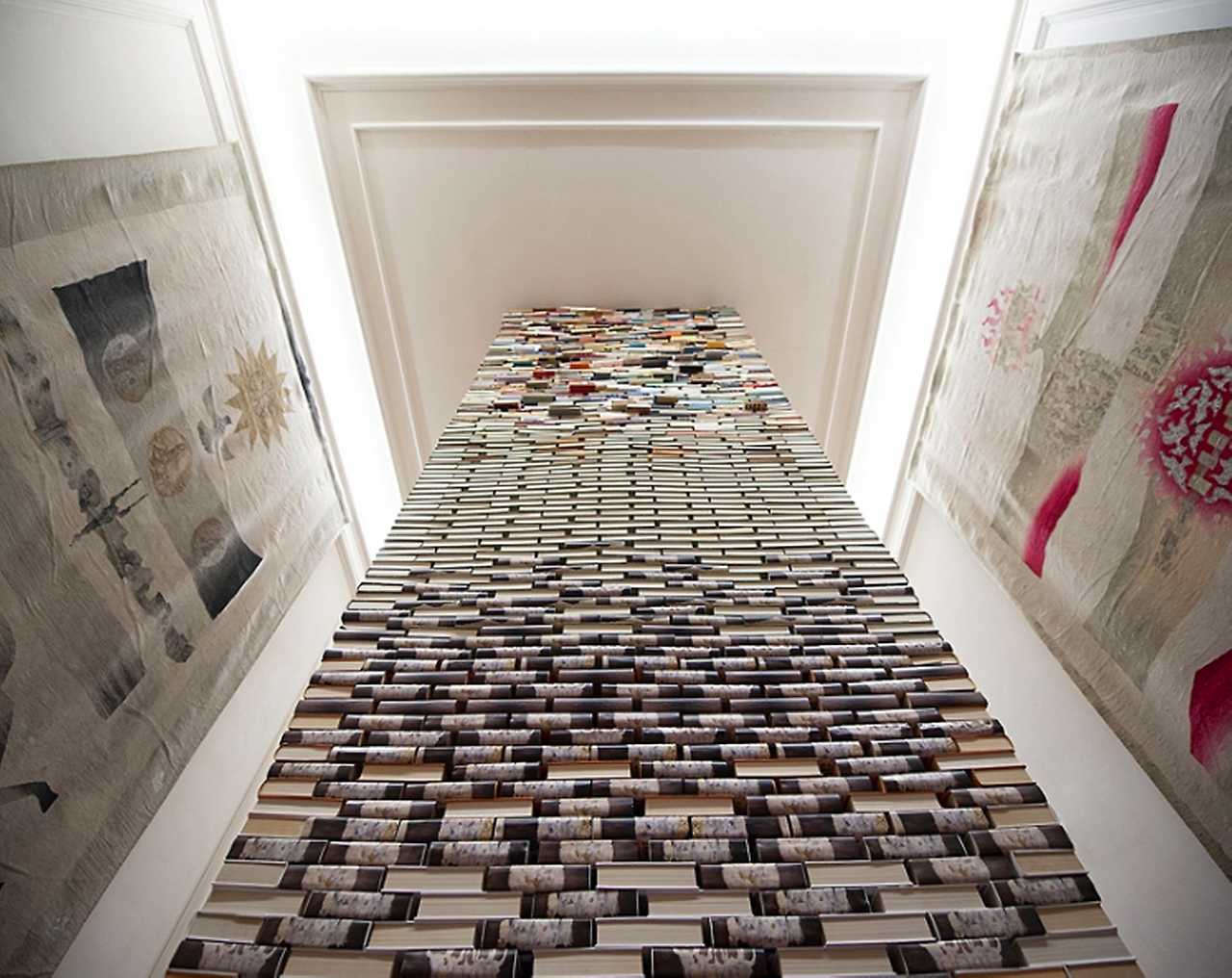
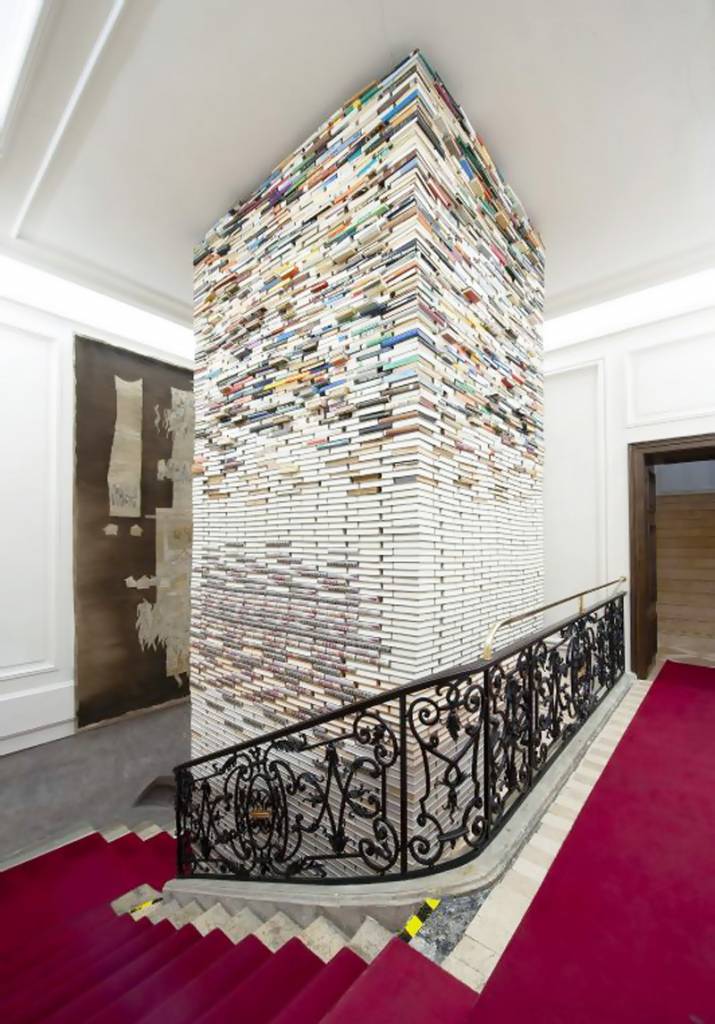
    The exhibition of three works in the Pálffy Palace of the Bratislava City Gallery forms a unified whole—one that also acts as a striking intervention into the architecture and functioning of the building itself. The installation of a “lift shaft and elevator,” the creation of a “cinema hall,” and the establishment of a “storage depot” and “waste site” are not only new architectural extensions of the building’s function, but also mutually contrasting artistic gestures. At the same time, all three are closely connected through a single shared object: the book. Here, the book is not merely presented as a classical textual medium, but as a metaphorical instrument for grasping the profound shifts through which our increasingly mediatized, post-industrial society transitions into the age of information.

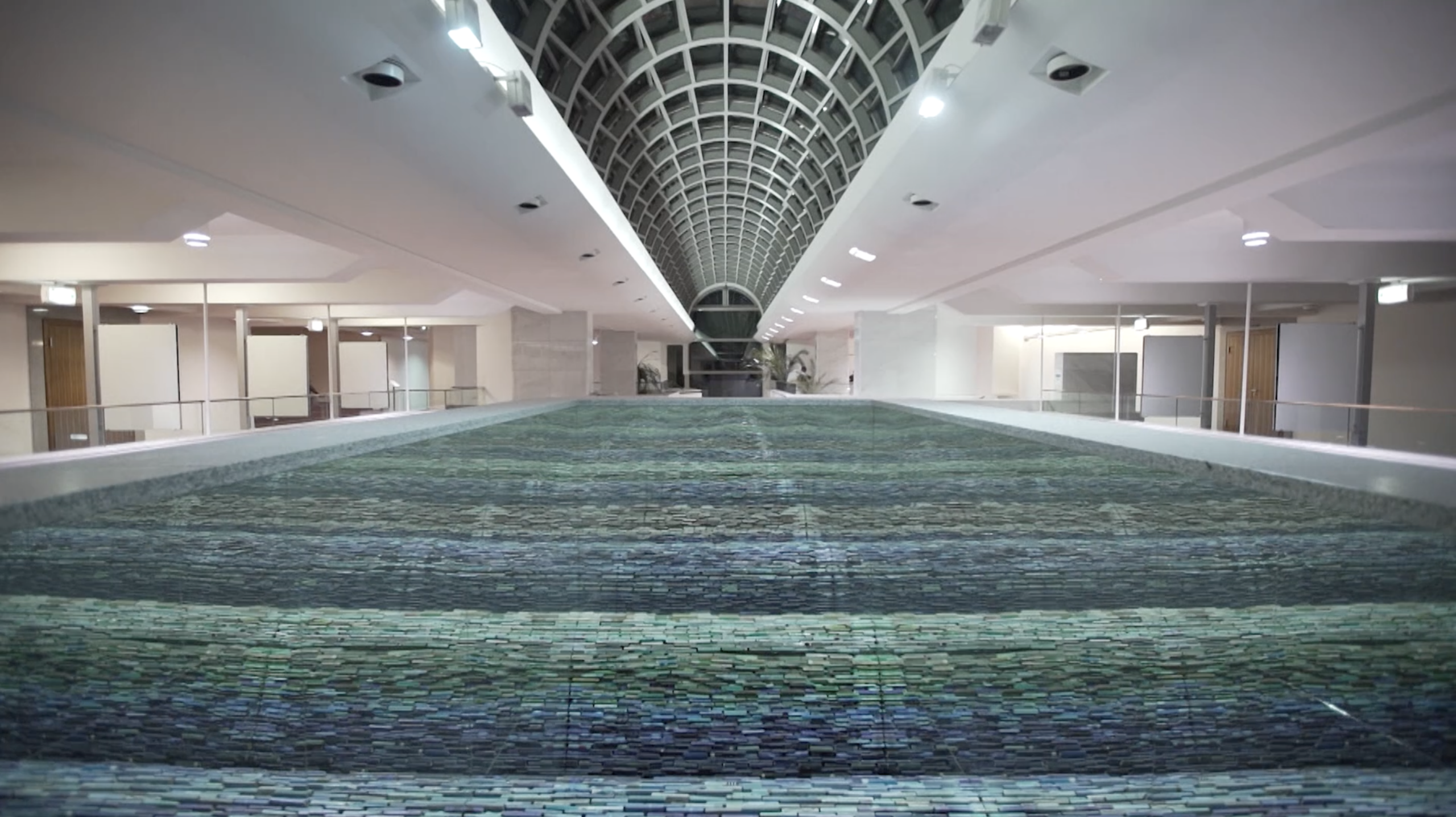
    The opening work of the exhibition is SEMIOLIFT, a temporary architectural addition to the palace constructed from books. It represents a symbolic expression of how media infiltrates and alters our natural world and its everyday operations.

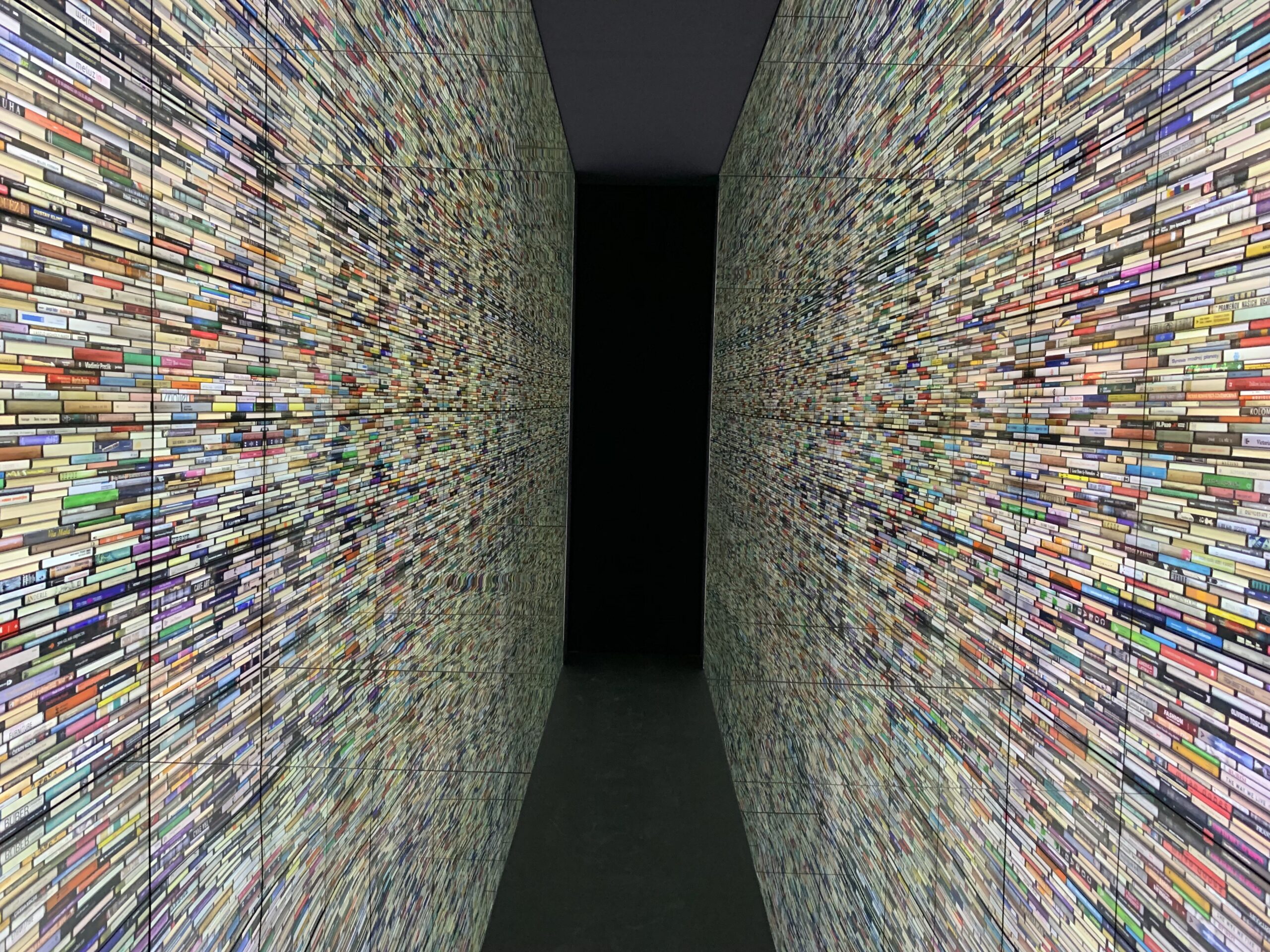
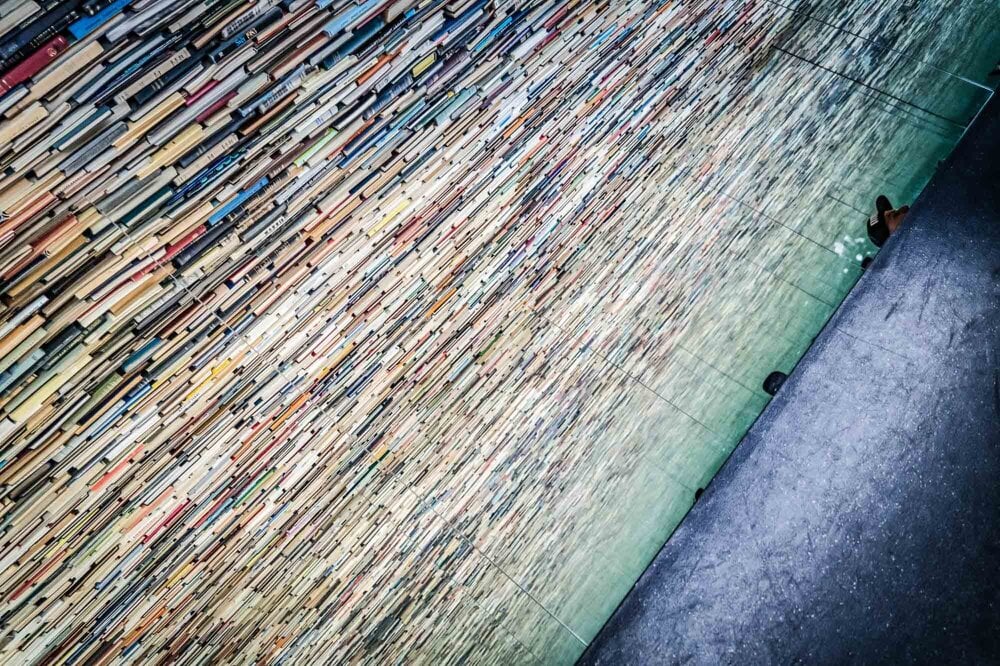
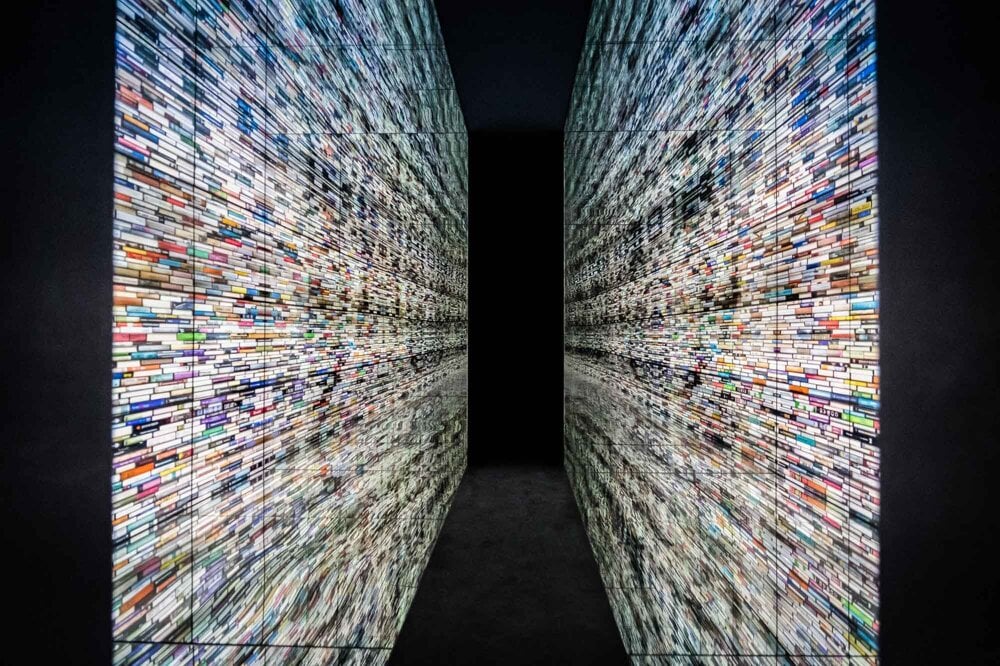
    The project MNEMOCINEMA PASSAGE is a direct reference to the original PASSAGE from 2004. It adopts the original’s formal and conceptual blueprint, reconfiguring it into a new associative framework. In this iteration, real books have been removed and replaced with their simulated presence. The walls of the new passage are no longer built from firmly stacked volumes, but from their illusionary projection—animated across LCD screens.

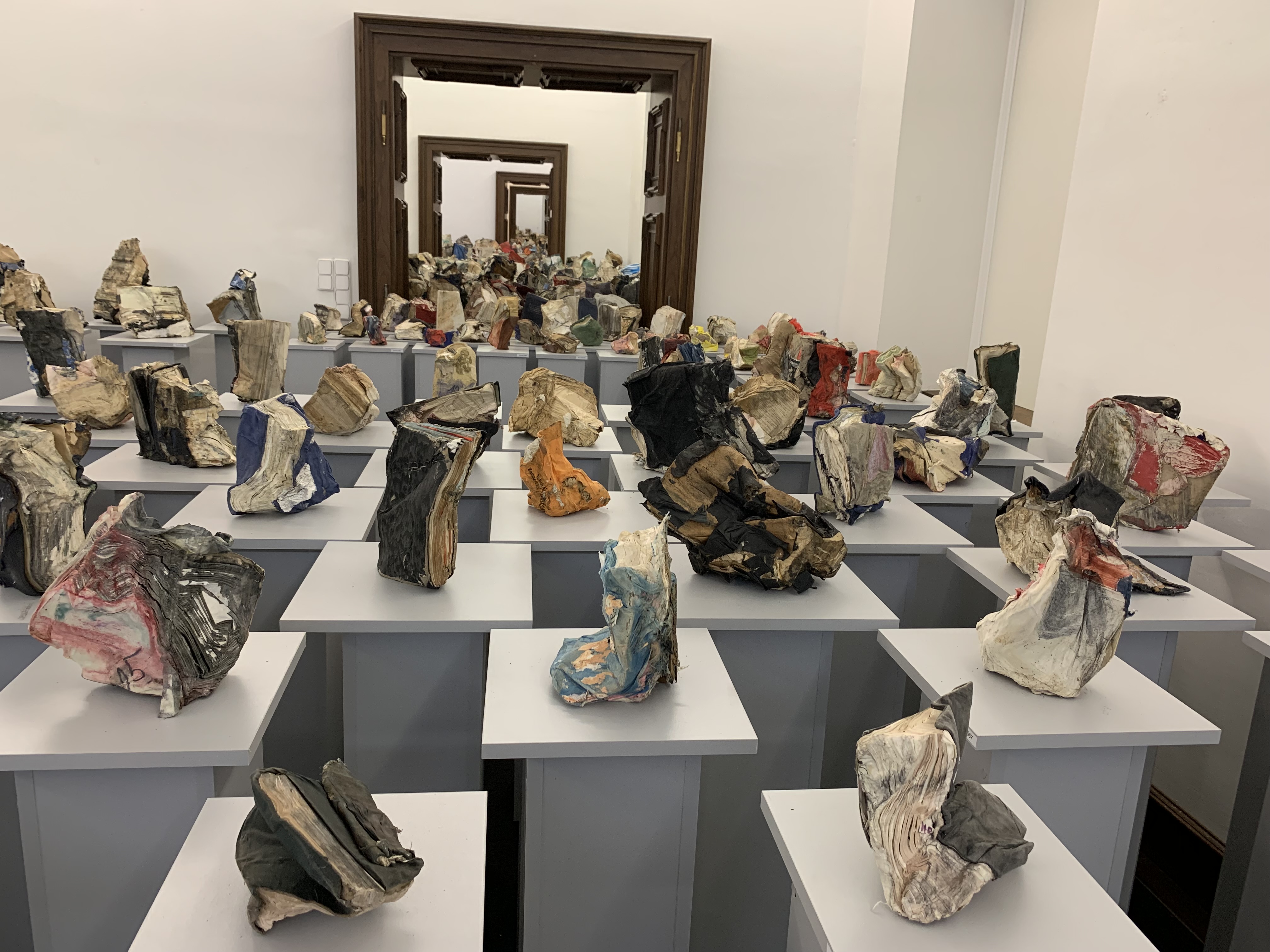
    The third project, AMNESITORY, presents a collection of post-media artifacts. Each object is created from books discarded by public libraries and subjected to processes akin to recycling. This destructive transformation was halted just before the books’ complete disintegration. The structure of the entire project—from the selection of objects and their spatial arrangement to the nature of the lighting—gradually evolves in meaning and intensity. The overall organization of the work is guided by the specific constellation of exhibition spaces within the Pálffy Palace.

    SEMIOLIFT

    The newly coined term Semiolift consists of the words “semiotic” and “lift.” Semiotics, the theory and study of signs and their meaning and encoding, is among the key tools used in analyzing contemporary society and culture. It allows for the interpretation of historic acts as well as the creation and transformation of new ones.

    Besides being a monumental sculpture, Semiolift is also sophisticated architecture—architecture within architecture—communicating with the staircase in Pálffy Palace and its fragments of Gothic architectural elements. There is also an association with Gothic spiritualism. The work follows the structure of tapestries by Juraj Krén (the artist’s father). The structure of the work changes, and a more detailed inspection reveals fragments of texts. In total, however, the work appears as a colorful painting, with its upper parts reduced to pure white surfaces.

    Semiolift preserves its mystery of discovery, as though it is always concealing something from us. The viewer gradually uncovers its individual parts and changing outer and inner structures. The work is like a chameleon, altering its colors depending on the environment. The height of the tower evokes the Tower of Babel—the structure that led to the confusion of languages.

    Semiolift may be perceived as an entrance gate to the exhibition, comprised of three installations. The viewers make two journeys: they take a lift (illusory) and climb the stairs. During the first journey, they are provided with time for meditation, while the second one requires physical performance. The vertical illusion—like a symbolic journey to paradise or to hell—prevails. The illusion of ascension is suggested by the synchronous animation of books on the side walls of the lift, where the flow of book titles simultaneously transitions to the ceiling screen, creating the impression of a passing semiotic universe.

    The time spent in the lift symbolizes a state in which a person, in a kind of hyper-presence, is confronted with a depiction of the world that, as the artist believes, is altered through their “metaphysical” mental activity.

    Unlike the artist’s previous book installations, here the viewers find themselves in a closed space that they cannot leave. They are left alone with their feelings, unable to consult their ideas. Apart from virtual reality and simulated universes, they have little experience of movement within endless space; a different sensory experience arouses different associations.

    The digital “nub of the problem” is located within the interior of a monumental book structure that fills the stairwell. At certain moments, regularly arranged book titles are “erased” by white covers, only to reappear—suggesting the hope of a continuation of something that, in the endless course of history, cannot be halted. However, uncertainty remains, reinforced by the moving and sprung elevator floor in this seemingly playful installation. The feeling of dizziness, emptiness, and the possibility of falling activates the viewers’ senses, confronting them with the uncertain state in which they find themselves.

    PASSAGE MNEMOCINEMA

    The work Passage Mnemocinema elaborates on the intentions of Passage, which became a part of the Bratislava City Gallery’s permanent installation in 2004. Passage gained international recognition and was interpreted in many different ways. It seemed almost impossible to further develop its idea and visual effect. However, after fifteen years, Matej Krén returned to the work, reflecting on the radical changes our society is undergoing in the digital era—including the transformation of media, human beings, and the world itself.

    The title Passage Mnemocinema was created using a Duchampian method based on the fusion of meanings resulting from different spellings and pronunciations: Mnemocinema – Mnemosyne. A neologism, Mnemocinema refers to the field of associations linked with the concepts of memory and film projection. It also alludes to Mnemosyne, the ancient Greek goddess, and to the river of the same name, which possessed magical powers to manipulate the forgetting of past lives.

    In this context, the motif of flowing through the realm of Hades is crucial—not to mention the problem of death and reincarnation. Mnemosyne (μνημοσύνη, “memory” in Greek) is the personification of memory in Greek mythology. Mnemosyne is also the mother of the nine Muses, the goddesses of arts and science, whose father was Zeus. According to some sources from the 4th century BCE, Mnemosyne was also a river in Hades—the counterpart to the river Lethe. Dead souls who drank from Lethe forgot their past lives before reincarnation, while the initiated were instructed to drink instead from the Mnemosyne, the river of memory.

    Comparing the titles Passage and Passage Mnemocinema, the shift in interpretation is evident, with deliberate parallels retained in their structure and formal rendering. The problem of re-interpretation is among the key themes of the exhibition, although this may not be immediately apparent. In today’s world, interpretation has become a crucial issue—one that, along with symbolic representation, is radically reshaping our perception of reality.

    The visually captivating installation consists of books and mirrors—the “building blocks” that have long been used and subjected to various artistic transformations. The book represents the vast potential of human existence; it is a carrier of meaning, word, sign, writing, memory, and intergenerational experience. The mirror functions as an extension of reality, or as the boundary between reality and illusion. The third architectural element consists of projection screens displaying books moving in different directions and at varying speeds.

    The tangle of book titles, metamorphosed into a digital library, seems no longer intended for human eyes. The contents in digital media flow like a river. Paradoxically, information overload and the constant expansion of knowledge push us to the limit of comprehension—potentially leading to superficiality, apathy, and emptiness. The fictional abyss beneath the narrow pathway in the passage highlights both the drama of sensory perception and the existential drama of our time.

    Here, the viewer enters a world that appears symbolic and fictional. However, from the artist’s perspective, it is precisely the world we inhabit:

    “After leaving the passage, our thoughts and actions are so conditioned by what we have experienced inside that we remain captives of the passage. The possibility of freedom is full of contradictions. As Kafka put it, man experiences his greatest sense of freedom while passing from one cage to another—or from one passage to another—but it is only for a moment, and it is only an illusion.”

    The exterior architecture of the work is stark and austere, while the interior is dynamic and ever-changing. As with Passage Mnemocinema, the viewer need not step inside to experience the sensation of infinite space and movement. The view from the outside already evokes this feeling. Yet, the work “captures” and “entices” the viewer, inviting them to become part of it.

    In its infinite nature, the work becomes a symbol of the expectation of eternal life, envisioned by Jorge Luis Borges as a paradise constructed from an endless number of books. The work also evokes the cyclic repetition of certain historical challenges—suggesting that progress is not always linear and that looking backward is sometimes necessary.

    The constant substitution of symbolic representation for reality raises concerns about the emergence of a simulated, fictional world—one that may seem advantageous for both its creators and users. We are becoming participants in a “game” that we ourselves have initiated and produced, yet one that can easily take control over us. Passage Mnemocinema seeks to uncover, through the illusion of captivating fiction, other layers of fiction and captivity within the unbearable lightness of digital existence, as well as the state of a spiritual journey toward infinity.

    The work teeters between various levels of meaning—between the obvious and the hidden, the real and the illusory, the permanent and the ephemeral. Through its repeated explorations of symbolic representation and reinterpretation, it reaches the core of the matter, striving to comprehend and decode the transformations taking place.

    AMNESITORY

    The installation Amnesitory shifts our focus from the captivating Mnemocinema Passage to a post-apocalyptic vision of the world and human existence in the digital era. The fluidity of illusion in a simulated, boundless space is suddenly replaced by complementary structures that seem to return us to reality—revealing the true face of our existence, which today discreetly hides behind the digital curtain of new technologies.

    As the words in the title suggest—amnesia (memory loss) and depository (storage, archive)—viewers find themselves in a space that associates the dissolution of the entire spiritual human universe with the paper bodies of books. Here, the books are no longer used as building materials; they have been considerably transformed. The viewer is confronted with their dilapidation, facing the borderline situation of their self-transformation into matter devoid of meaning.

    The mechanical process of recycling, in the form of pressing, destroys the books at a time when their message is in grave danger—on the verge of total oblivion. After their structure has been altered, they can no longer be opened or read; their contents are almost entirely lost. Here and there, tiny fragments—letters and words—of texts emerge. However, they are merely empty frames of their original existence, which has vanished in the flow of time.

    As if taking part in a farewell ritual, the physical corpus of the books lingers, yet their real meaning and content have disappeared, existing only in human memory. The books are subjected to severe attacks and brute force. The vulnerability and transience of a book are confronted with the possibility of its transformation. Paradoxically, their destruction grants them a new artistic presence. Regardless of their content, each book takes on a unique artistic poetics.

    The entire organization of the collection adheres to the common principles of similar archives, including a cataloging system for the individual “items.” The structure of the whole is arranged into separate sections of the project, categorized by various distinguishing keys, evoking a false sense of distance and a cold detachment from the process of disappearance and dissolution.

    The books of Pijoan’s History of Art, displayed in the first room, serve as metaphors for the destruction of the entire history of art as we know it—or its transformation into another form. Initially arranged in strict order, they gradually dissolve into complete chaos. Once again, the virtual system describing the world appears to take precedence over its actual dissolution.

    The configuration of the pedestal bases for the individual books continuously changes, with the final room remaining physically inaccessible. The sensation of the depository’s infinite continuation becomes a parable, endlessly repeating the same message: the suggestive presence of the boundary between a physically unattainable world and the viewer’s reach. A fragile paper parable of the soul, this remains the ultimate message—one that, even in its dissolution, holds the only hope.

    The vision of disappearing books serves as a broader metaphor for what is unfolding in the spiritual and historical realms. The best interpretation of this concept is captured in Walter Benjamin’s reflection on Paul Klee’s work:

    “A Klee painting named Angelus Novus shows an angel looking as though he is about to move away from something he is fixedly contemplating. His eyes are staring, his mouth is open, his wings are spread. This is how one pictures the angel of history. His face is turned toward the past. Where we perceive a chain of events, he sees one single catastrophe that keeps piling wreckage upon wreckage and hurls it in front of his feet. The angel would like to stay, awaken the dead, and make whole what has been smashed. But a storm is blowing from Paradise; it has caught in his wings with such violence that the angel can no longer close them. This storm irresistibly propels him into the future to which his back is turned, while the pile of debris before him grows skyward. This storm is what we call progress.”

    (Benjamin, Walter: Theses on the Philosophy of History, Illuminations. New York: Schocken Books, 1969, p. 249.)

    Text by: Kristína Jarošová, Ivan Jančár
  • UNFOLDING THE INVISIBLE

    UNFOLDING THE INVISIBLE

    UNFOLDING THE INVISIBLE

    ARTIMIST x Grason Ratowsky

    May 2025

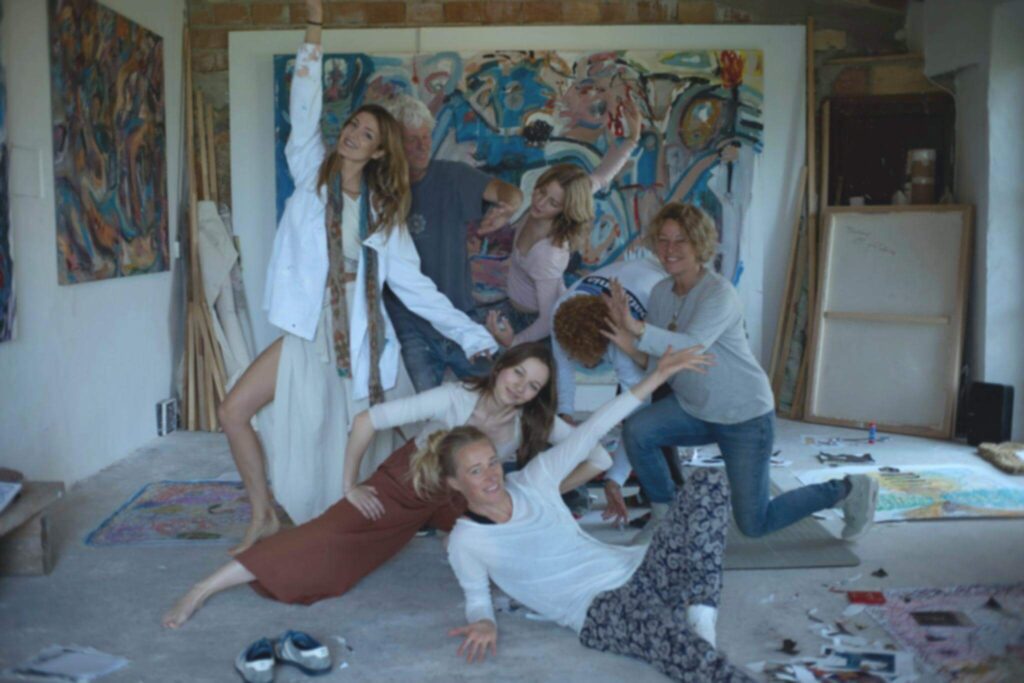
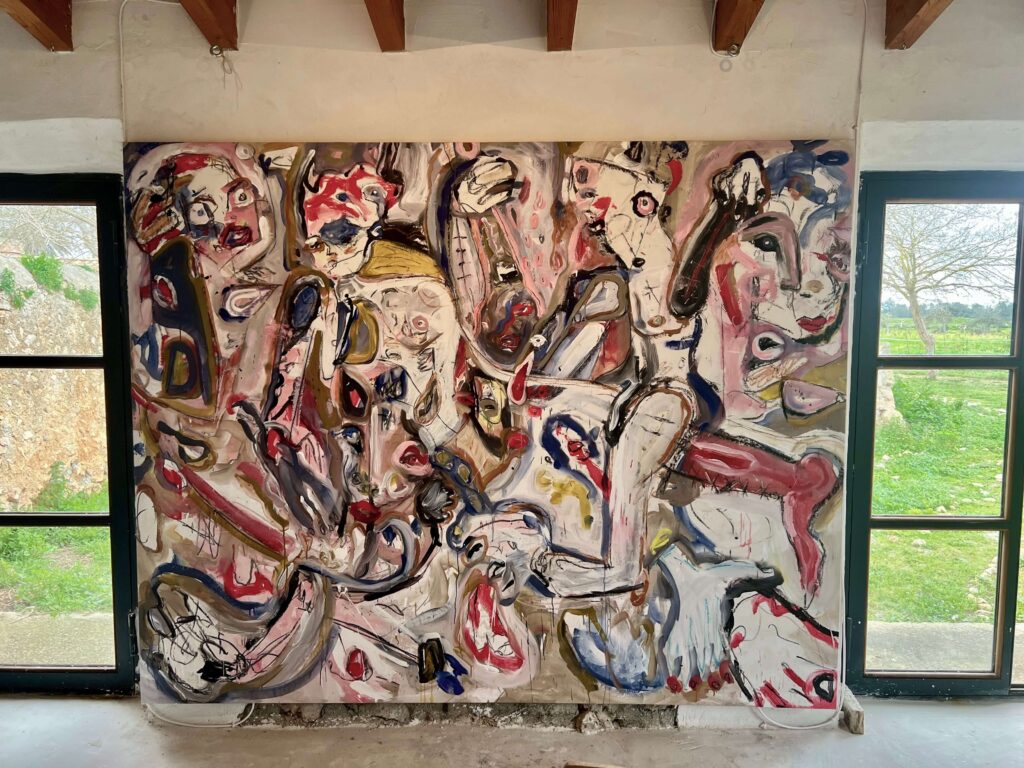
    A four-hour inner journey at Grason Ratowsky’s art studio guided a small group of participants through a creative and exploratory process of meeting oneself—through emotionally charged, process-oriented artworks. The experience merged curated art immersion, transformative body–mind practices, and tailored curatorial guidance.
    About the artist

    Grason Ratowsky is a contemporary American artist based in Mallorca whose emotionally charged paintings explore the subconscious through a bold, process-driven visual language. Rooted in expressionism and fused with surreal figuration and abstraction, his work draws viewers into dreamlike realms where fragmented figures, mythic symbols, and visceral gestures collide.

    Raised between the natural world and a vivid inner imagination, Ratowsky describes art as something innate—“it’s simply who I’ve always been.” His painting process begins with spontaneous, primal gestures and unfolds into emotionally resonant compositions that feel both intimate and universal.

    His works offer psychological tableaux of transformation, intimacy, and the fragile complexity of being human—inviting viewers to feel, remember, and uncover meaning between the lines.

    EVENT Details

    Location: Artist studio, Mallorca

    Dates: May 2025

    Guidance: Kristína Jarošová — founder of ARTIMIST

    FAQ

    What is YOURNEY?

    ARTIMIST YOURNEY is a carefully curated experience that explores the transformative power of art and self-discovery. Guided in a small group within a curated art setting, it merges immersive art encounters, resonant body–mind practices, and tailored curatorial guidance.

    Who is it for?

    Art enthusiasts, collectors, creatives, and curious individuals — anyone open to a more joyful, experiential, and personal relationship with art and self in a curated space.

    What does it involve?
    • Curated art encounters in selected museums, galleries, or studios
    • Embodied and reflective exploration of artworks to spark awareness, creativity and insight
    • Curatorial context to deepen understanding through art history and storytelling
    • Creative expression using art tools and guidance to reflect your inner world
    • Journaling and intuitive prompts to anchor your personal discoveries
    What may you experience
    • Deeper appreciation and understanding of selected visual art
    • Increased self-awareness, states of flow, creativity and emotional insight
    • Heightened presence and body-mind sensitivity
    • A sense of calm, clarity, and integration between art and life
    What’s expected of you?
    • Willingness to engage, openly and at your own pace
    • A respectful presence to support shared experience
    • No prior experience with art, creativity, or body–mind practices is required
    Can YOURNEY be adapted to various settings?

    Yes. The experience is adaptable to public, private, and online formats—ensuring accessibility and flexibility for diverse audiences, spaces, and visions.

  • ART FOND COLLECTION

    ART FOND COLLECTION

    Central Europe, 2014 – 2024

    art-artfond-collection
    art-artfond-kristina
    art-artfond-brozura
    previous arrow
    next arrow

    The Art Fond – Central European Contemporary Art Fund comprises over 350 works by Slovak and Czech artists, making it one of the largest contemporary art collections in the region.

    “The ART FOND Collection stands as a living testament to the transformative power of contemporary art and its lasting legacy. From paintings and sculptures to multimedia and action art, these works reflect the bold visions of artists who, despite censorship and repression of former socialist Czechoslovakia, transformed disillusionment into authentic and radical reflections of the human experience. Their resilience, creativity, and vision have influenced subsequent generations of artists, and together they continue to gain recognition on the international art scene.

    Creating this collection between 2014 and 2024 has been an honour and an incredible journey – as building a collection is not just about having a well-defined strategy or acquiring works at the right price. It is also about fostering relationships, trust, and vision. It serves as a platform for supporting and presenting the values it upholds – to promote visual art, the philosophy of collecting, and public engagement.”

    Kristína Jarošová
    Co-founder, Acquisitions, Former Director of the ART FOND Collection

    Preview the catalogue here.